Download The


2019-20 Hyola XC IMI Residue Trial Results
XC TECHNOLOGY BENEFITS & IMI TREATMENT RESULTS SUMMARY
- Pacific Seeds is the only company in the World currently to have developed and released XC Technology dual herbicide GM stacked technology
- XC stacked technology is set to take over from TruFlex or Roundup Ready technology as they demonstrate competitive yields and more flexibility.
- XC Technology will be more popular also due to significant increases in area across Australia being sown into IMI Tolerant Wheat, Barley, Lentils, Beans and Oats.
- XC Technology is aimed at both Improving weed control options in IWM programs and providing vital crop protection for growers from IMI soil residual carryover.
- Current XC hybrids are adapted between 1t/ha right through to 3.5t/ha yield growing environments; Hyola Garrison XC and Hyola 540XC.
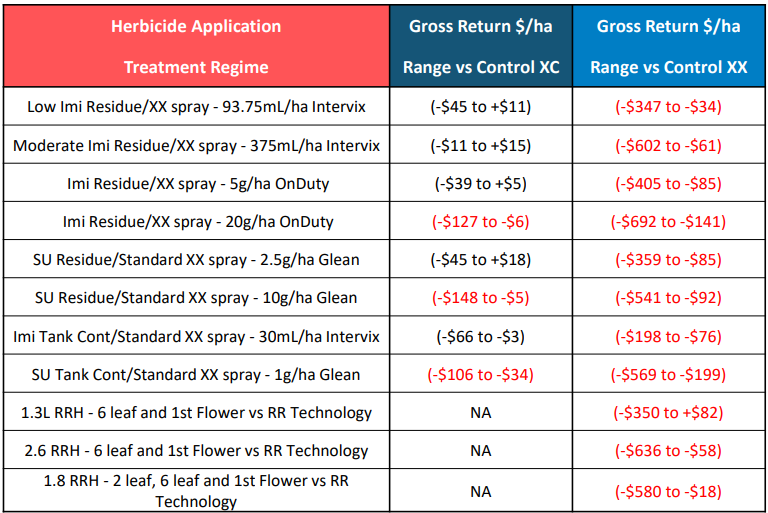
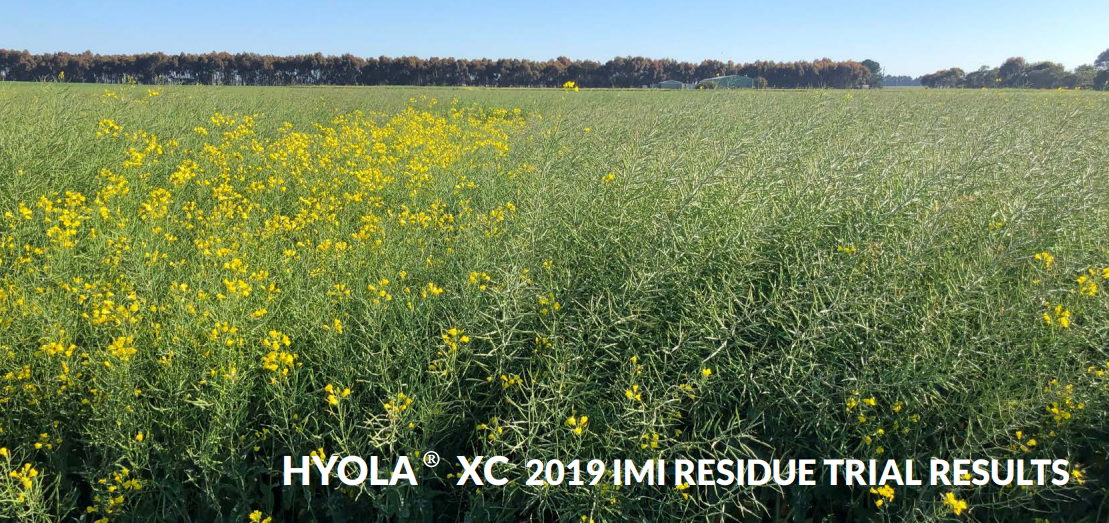
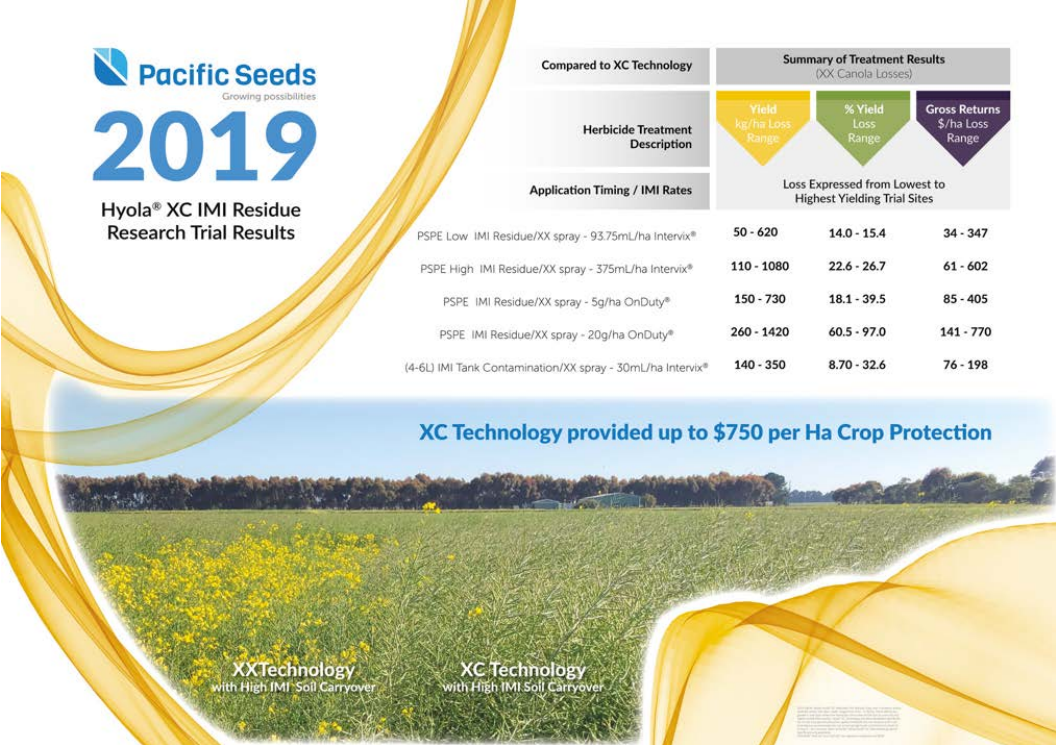
- In 2019, XC IMI replicated residue trials showed up to $750/ha protection value using PSPE IMI or SU timings as simulated treatments.
- Boom spray contamination with low levels of IMI or SU showed up to $570/ha protection value from using XC technology over straight XX technology.
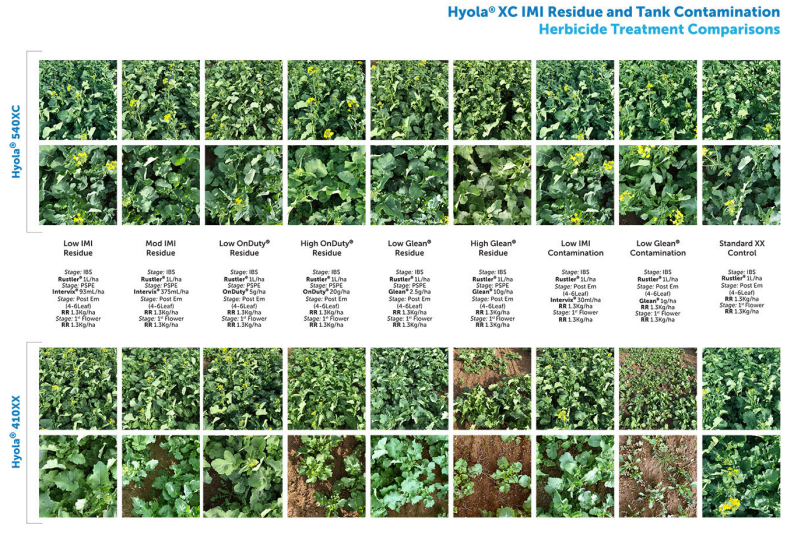
GROUP B IMI & SU TREATMENT COMPARISONS
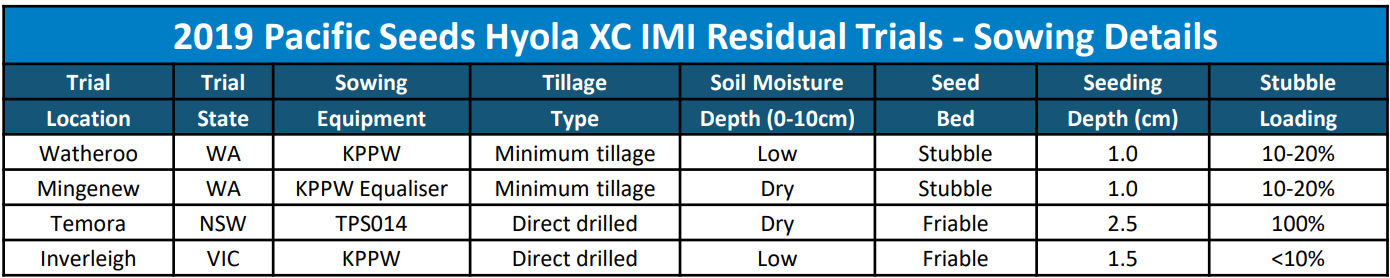
AGRONOMIC DETAILS


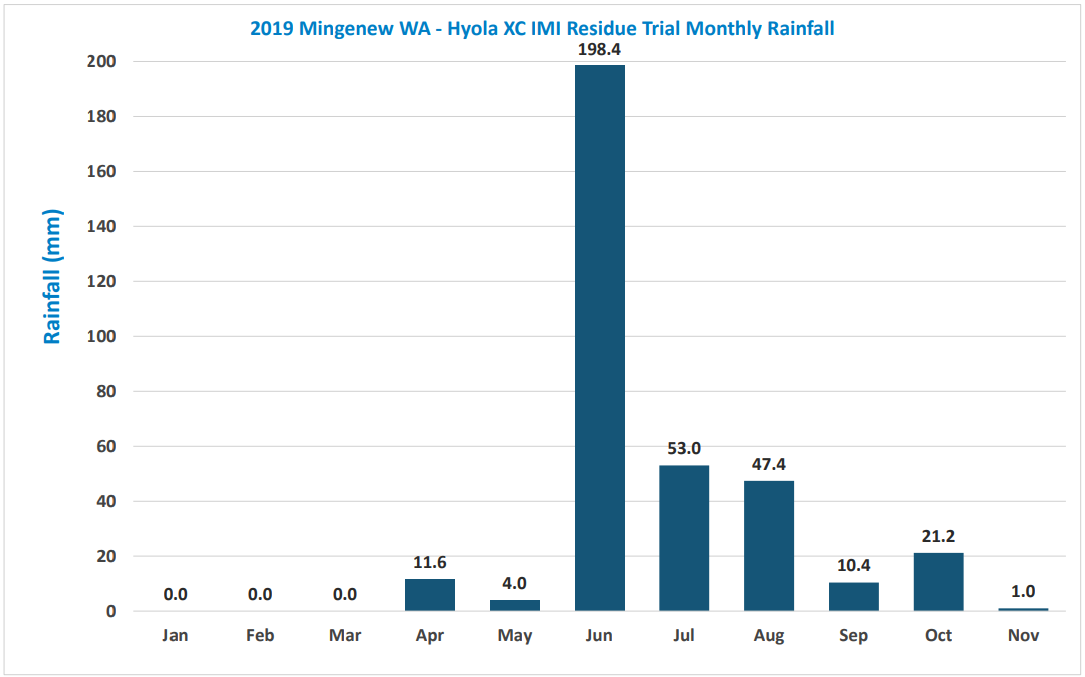
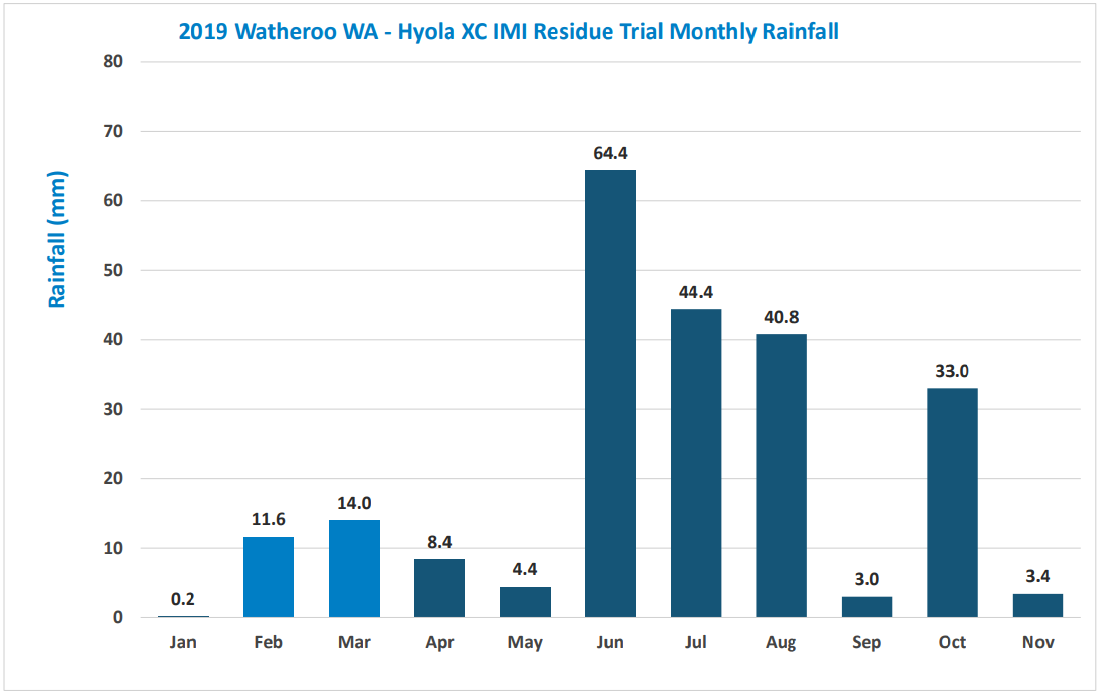
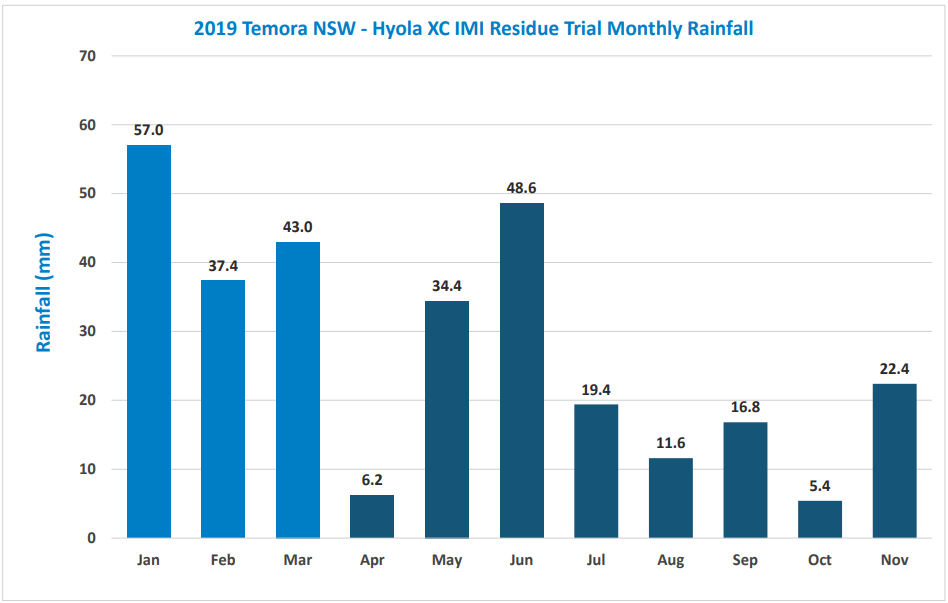
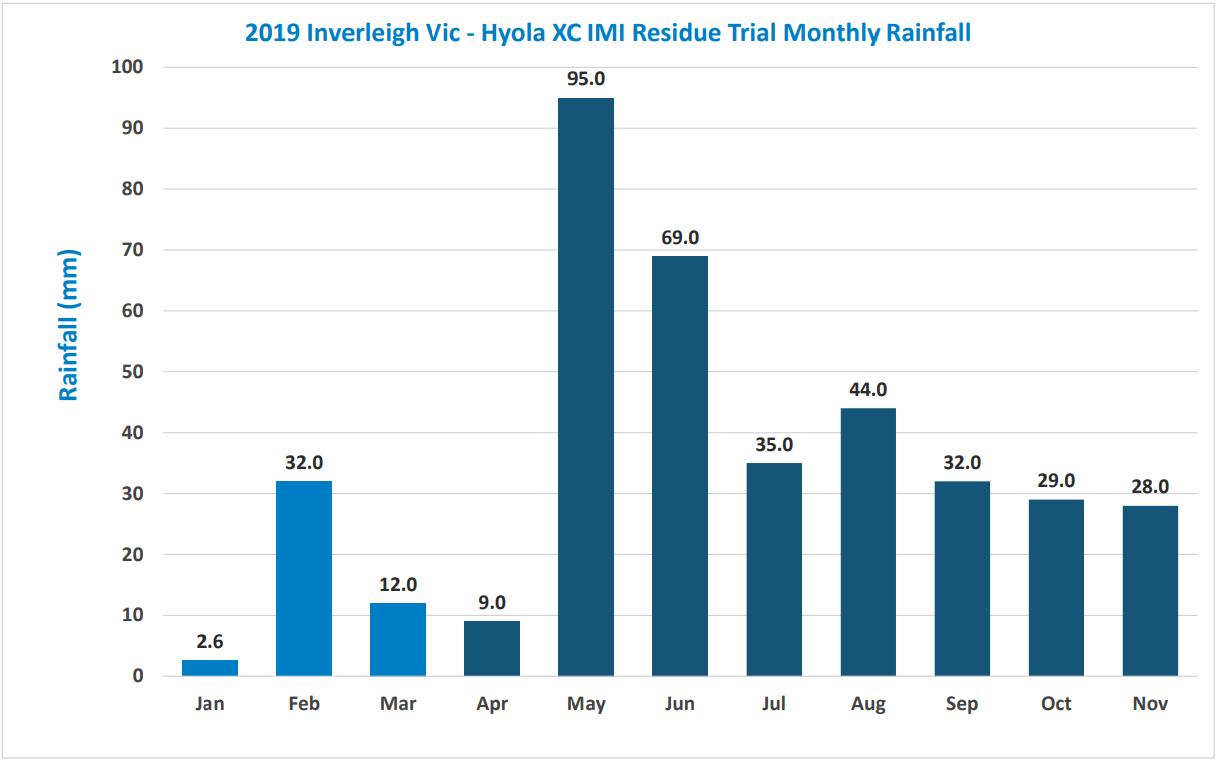
RAINFALL DISTRIBUTION DETAILS
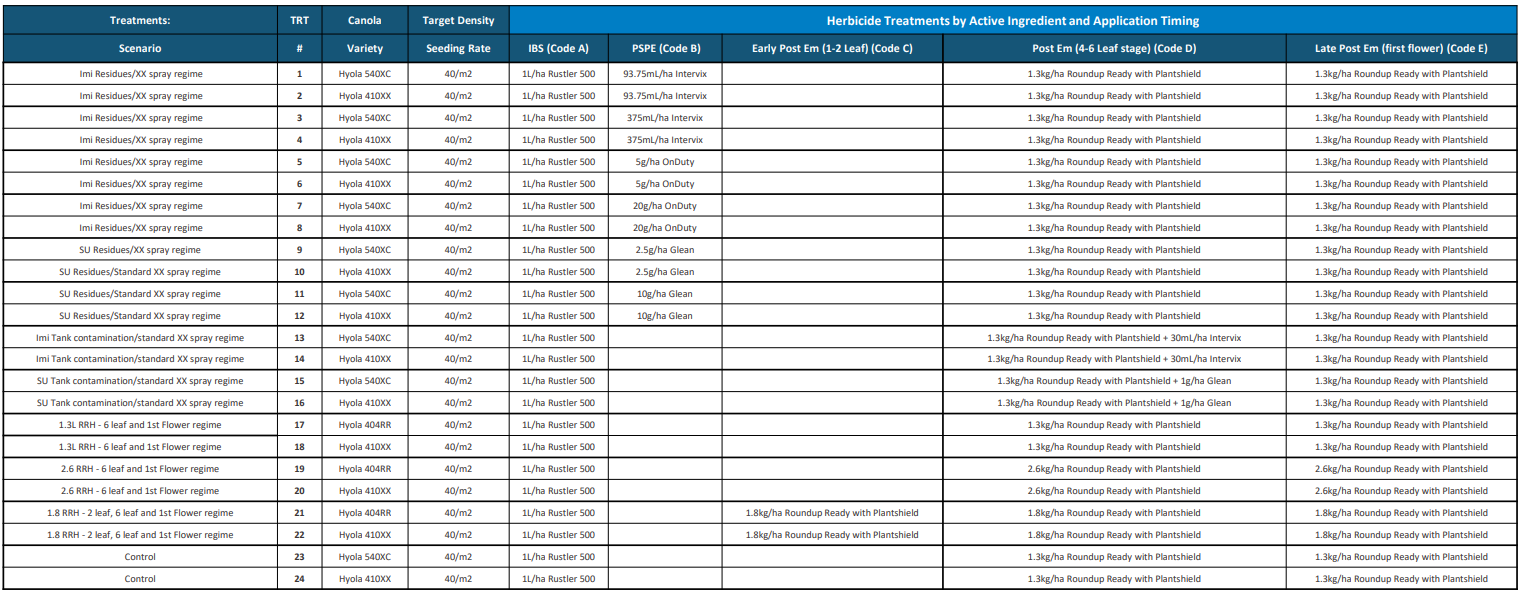
TREATMENT LISTING
ALS INHIBITORS
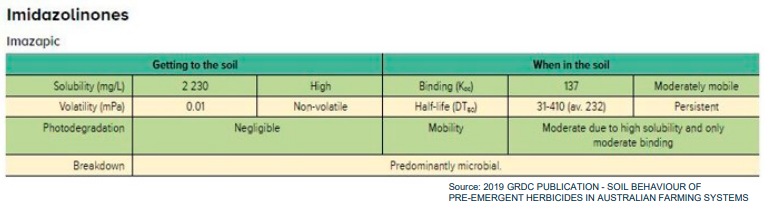
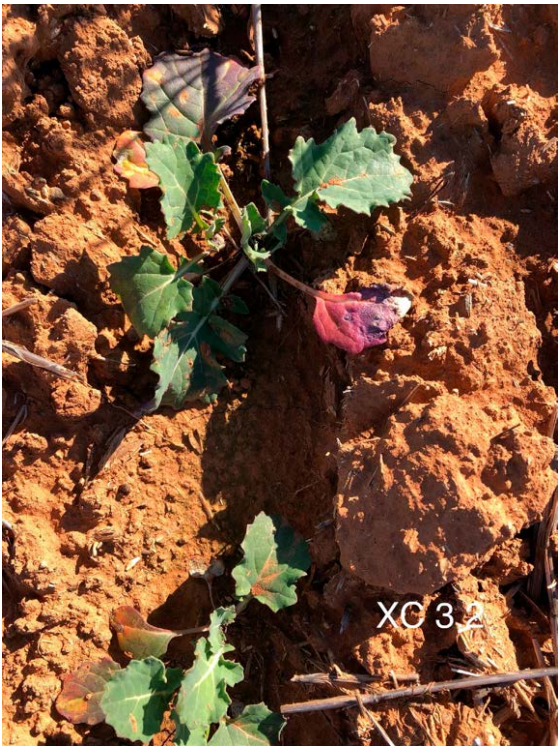
Imidazolinones (imazapic)
Practical Considerations:
- With volatility and photodegradation both being low, the herbicide will
not breakdown rapidly on the soil surface after application. - High solubility and only moderate binding allows for the herbicide to be
readily washed off stubble and incorporated with rainfall. - Moderate binding prevents excessive losses via leaching. Binding
increases at lower soil pH. - Very Persistent due to slow microbial breakdown, especially under
conditions of low soil pH and low soil moisture. Substantial plantback
constraints exist. Observe label constraints for pH, time and rainfall
requirements.
ALS INHIBITORS
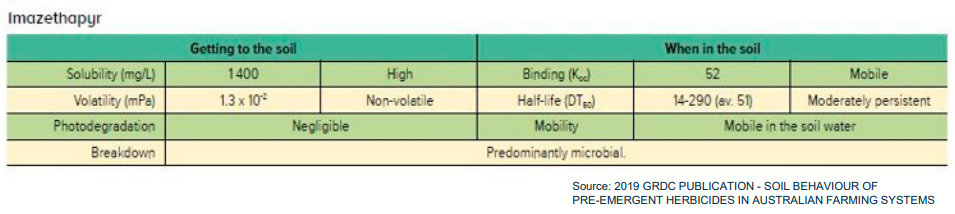
Imazethapyr
Practical Considerations:
- With volatility and photodegradation both being low, the herbicide will not breakdown rapidly on the soil surface after application.
- Imazethapyr has post-emergent and pre-emergent activity. Once in the plant it is readily translocated.
- Low binding in neutral and alkaline soils means the herbicide is likely to be freely available in soils with higher organic matter and soils where pH is below 6.5
- Persistence is moderate, however it can be quite long under conditions of low soil pH and low soil mixture, where binding increases and microbial activity is reduced. Substantial plantback constraints for pH, time and rainfall requirements.
- Crop Selectively comes from rapid metabolism in tolerant plants.
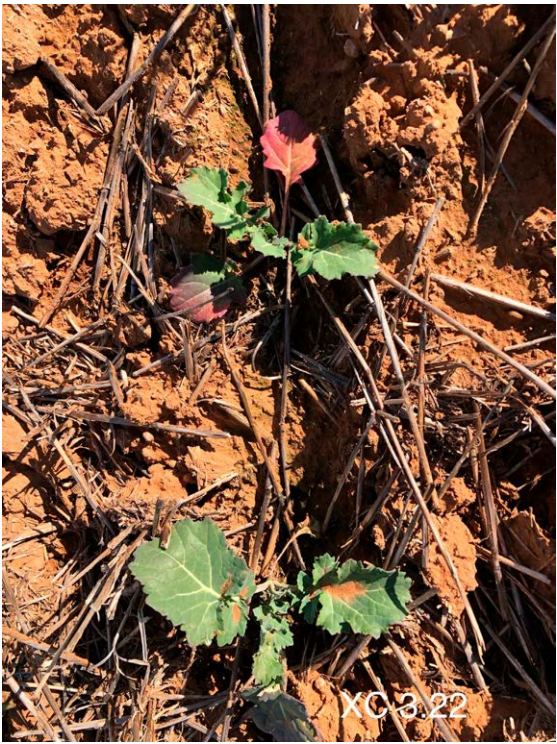
ALS INHIBITORS
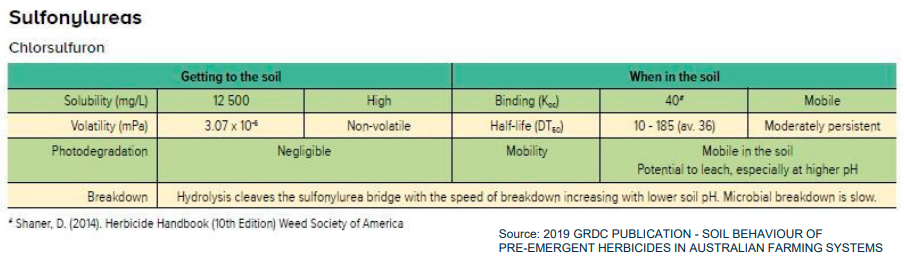
Sulfonylureas (chlorsulfuron)
Practical Considerations:
- With volatility and photodegradation both being low, the herbicide will not breakdown rapidly on the soil surface after application.
- Solubility is high and binding to organic matter is low, assissting rainfall to wash herbicide of the stubble.
- Speed of breakdown depends on soil pH and moisture content. Plantback to sensitive crops can be very long in alkaline soils especially under dry summer conditions. Observe label constraints for time and rainfall.
- This also means the compound is freely available for root uptake and translocation once in the soil however there is potential for leaching down the profile following large rainfall events, particularly in alkaline soils. If applied to dry soil without mechanical incorporation and followed by a significant rainfall event during emergence, there is potential for it to move down the profile and damage germinating crops.
SITE HERBICIDE BEHAVIOUR SUMMARY
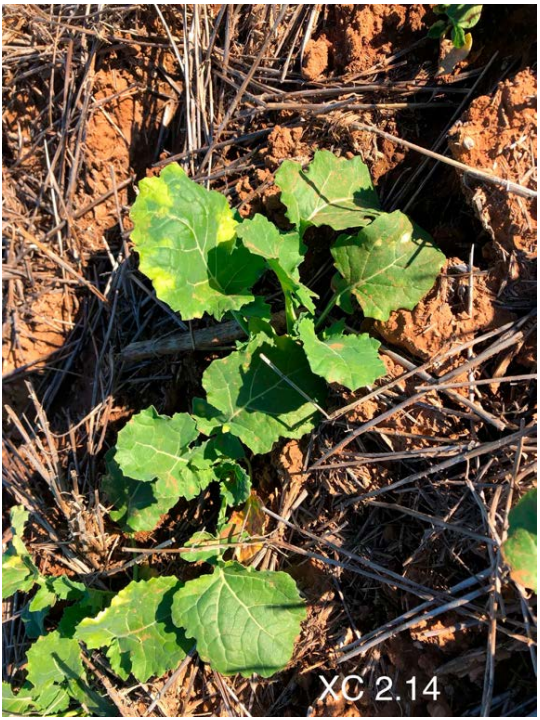
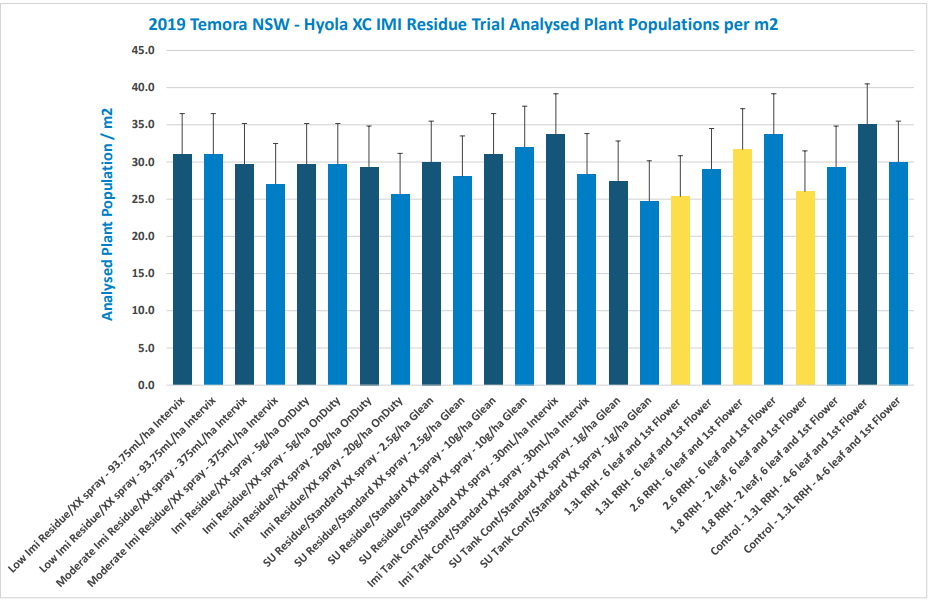
2019 Temora NSW
Minimal establishment effects mainly due to soil having even dry profile establishment conditions and pH related IMI & SU movement into a zone ‘slightly’ below the roots of the young seedlings. The canola was impeded initially by ongoing dry conditions and frosts which didn’t allow plants to find either water or IMI residue below the roots of the young seedlings until later in the season (July to Sept) but symptoms were somewhat variable because it was more alkaline at depth which changes the movement pattern of different chemistries.
Acid topsoil may have led to faster Glean® breakdown where as not the case of IMI chemistry. Channels of IMI chemistry in the profile after minimal movement maximised the damage effect expected on the XX TruFlex® technology with PSE application timing. The canola roots did make it into the chemical zone eventually and then treatment damage occurred, very often to significant levels.
Variations in solubility have effected the IMI chemistry breakdown (less movement for OnDuty® chemistry). 1g of Glean® tank-mix and 30ml Intervix® tank-mix contamination treatments over the top has significantly impacted plant growth and yield in the XX hybrid with no inbuilt CL protection. The XC dual stack technology has shown very good resilience to Intervix® and OnDuty®, as well as moderate tolerance to SU chemistry residue in this site. The XX TruFlex® technology had significantly lower yields with both rates of Intervix® and OnDuty® as well as the low and high rates of Glean® applied PSPE.
Roundup Ready® technology yield showed a downward trend across treatments but not shown as being always significant due to low yielding variable site, however, yield decreases are rate related with higher rates at flowering or total rates applied explaining the differences. The XX TruFlex® technology showed no significant decrease in yield, regardless of straight glyphosate rate and application timings.
SITE HERBICIDE BEHAVIOUR SUMMARY
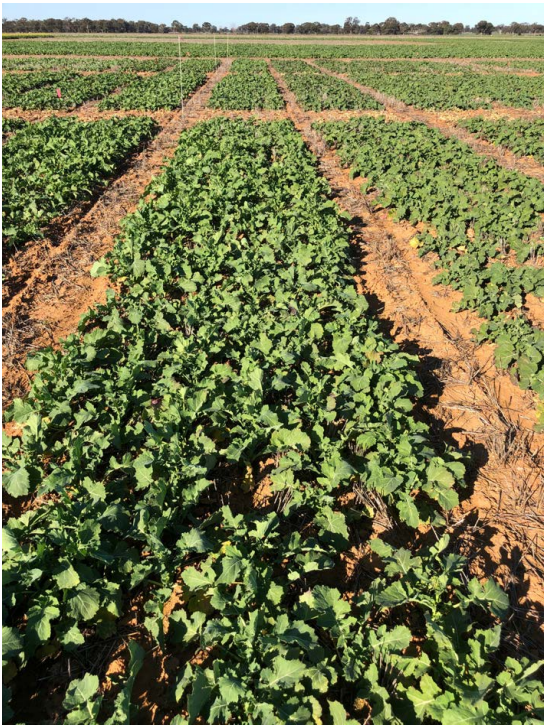
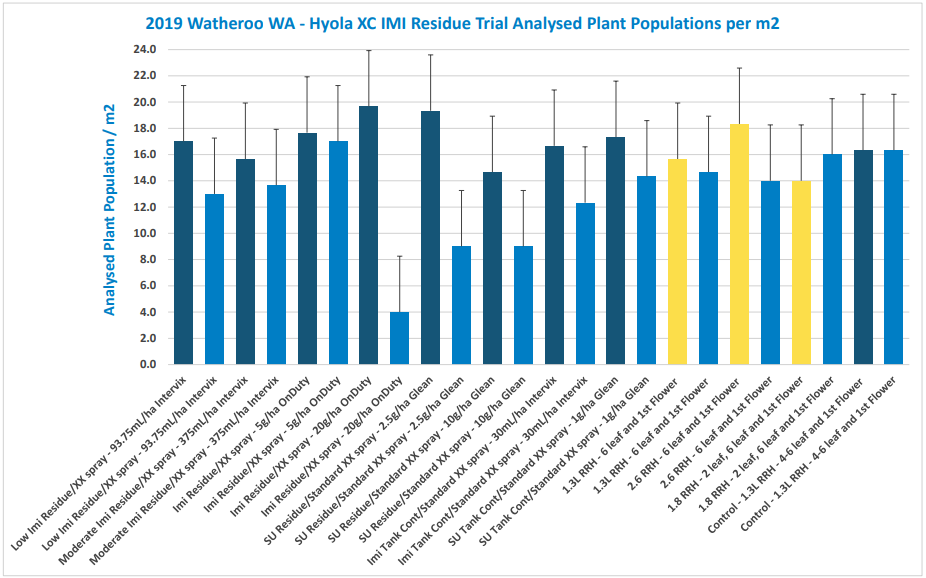
2019 Watheroo WA
Varied establishment effects were mainly due to drier establishment conditions in May and pH related IMI & SU movement into a zone within the roots of the young seedlings.
The canola plants were impeded initially by dry conditions and then by specific treatments mainly being PSPE applied high rates of OnDuty as well as low and high rates of Glean®.
Acid soils both in the top 10cm and in the 10-20cm depth have led to faster Glean® breakdown where as not the case of IMI chemistry. Reasonable amounts of IMI remained in the root profile especially with the higher rates of both Intervix® and OnDuty® where the damage to yield was significant. When the plants were older symptoms developed quite effectively with some treatments and because there was more acid at depth, changes to the movement pattern of different chemistries would have occurred. Roots did make it into the chemical zone relatively early in the crop growth and then crop damage occurred to varying levels depending on treatment.
Variations in solubility have effected the IMI chemistry breakdown (less movement for OnDuty® chemistry). 1g of Glean® over the top has significantly impacted plant growth and yield in the XX hybrid with no inbuilt CL protection as it is very sensitive to Glean®. The XC dual stack technology has shown very good resilience to Intervix® and OnDuty®, as well as moderate tolerance to SU chemistry residue applied PSPE in this site. The XX TruFlex® technology had significantly lower yields with higher rates of Intervix® and OnDuty® applied PSPE as well as the high rate of Glean® applied PSPE.
Roundup Ready® technology yield downward trend across treatments but not shown as being always significant, however yield decreases are rate related with higher rates at flowering or total rates applied explaining the differences. The XX TruFlex® technology showed no significant decrease in yield, regardless of straight glyphosate rate and application timings.
SITE HERBICIDE BEHAVIOUR SUMMARY
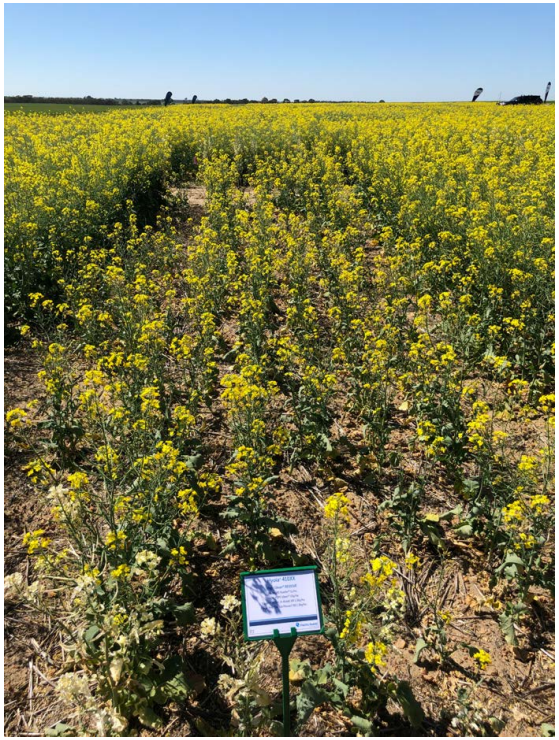
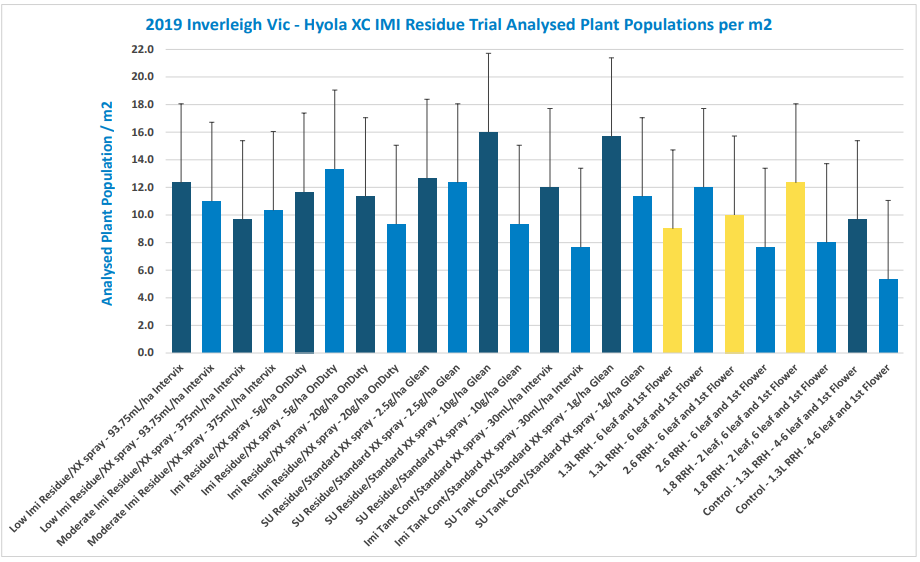
2019 Inverleigh Vic
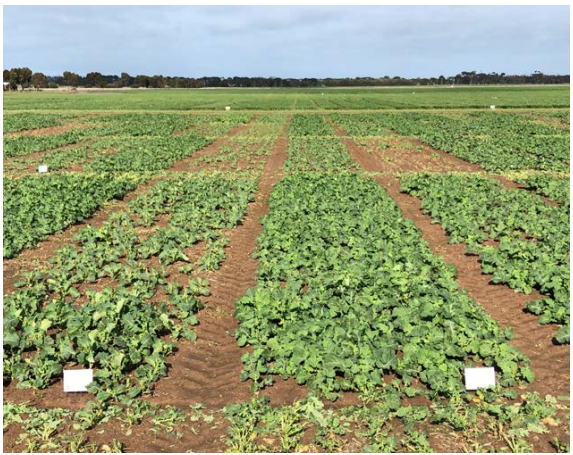
Sown on the 22nd April into a heavier soil type with drier profile conditions led to varied establishment effects and lower than expected or targeted plant populations. Topsoil 0-10cm 6.4 pH at neutral levels leading into slightly acidic 5.2 at 10-20cm would have affected both movement and breakdown of IMI & SU chemistry as well as movement into a zone within the roots of the young seedlings. The canola plants were impeded initially by dryish conditions and then affected in plant number and leaf growth by specific treatments in May to August with some good follow-up rains.
Neutral soil both in the top 10cm may have led to some breakdown of IMI type chemistries whereas in the 10-20cm depth where acidity was higher, faster Glean® breakdown may have occurred. Reasonable amounts of IMI remained in the root profile especially with the higher rates of both Intervix® and OnDuty® where the damage to yield was significant. Mid-way through the crops growth, when the plants were more developed, symptoms developed quite effectively with some treatments, possibly due to more acid at depth where root development making it into the chemical zone provided damage to varying levels depending on treatment. i.e. specifically the higher rates of Intervix® and OnDuty® and Glean®.
Variations in solubility have effected the IMI chemistry breakdown (less movement for OnDuty® chemistry). 1g of Glean® over the top has significantly impacted plant growth and yield in the XX hybrid with no inbuilt CL protection as it is very sensitive to Glean®. The XC dual stack technology has shown very good resilience to Intervix® and OnDuty®, as well as moderate to good tolerance to SU chemistry residue applied PSPE in this site. The XX TruFlex® technology had significantly lower yields with higher rates of Intervix® and OnDuty® applied PSPE as well as the high rate of Glean® applied PSPE.
Roundup Ready® technology yield decreased across treatments and were shown as being significant, with the decreases being rate related with higher rates at flowering or total rates applied explaining the differences. The XX TruFlex® technology showed no significant decrease in yield, regardless of straight glyphosate rate and application timings. The XC Technology showed the highest yields in the trial due to rainfall events and higher yielding environment.
SITE HERBICIDE BEHAVIOUR SUMMARY
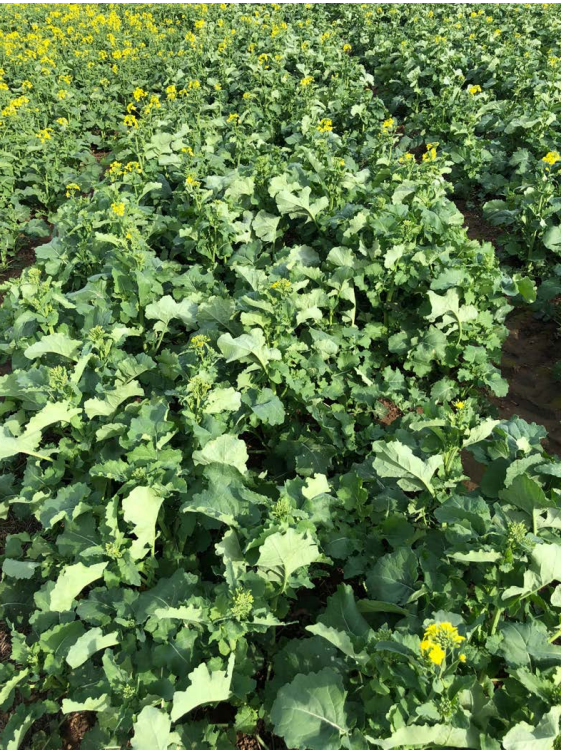
2019 Mingenew WA
Varied establishment effects were mainly due to variable establishment conditions and pH related IMI & SU movement into a zone ‘well’ below the roots of the young seedlings. The canola plants were impeded initially by very high impact rainfall events and then the droughted conditions and frosts didn’t allow plants to find either water or IMI residue. 10g of Glean® has washed down (possibly only 20-25% left), and been broken down and the canola roots may not have found as significant quantities as expected with PSPE application.
Acid soils have led to faster Glean® breakdown where as not the case of IMI chemistry. Smears of IMI left in the profile minimised the damage effect expected. When the plants were older as the crop grew it was able to get into it but symptoms were very slow due to dry conditions and because there was more acid at depth, changes to the movement pattern of different chemistries would have occurred. Roots did make it into the chemical zone eventually and then damage occurred to varying levels.
Variations in solubility have effected the IMI chemistry breakdown (less movement for
OnDuty® chemistry). 1g of Glean® over the top has significantly impacted plant growth and yield in the XX hybrid with no inbuilt CL protection as it is very sensitive to Glean®. The XC technology has shown good resilience to Intervix® and OnDuty®, as well as the SU chemistry residue in this site. The XX TruFlex® technology had significantly lower yields with both the low and high rates of Glean® applied PSPE, despite the soil type, big initial rainfall events and lack of follow-up events.
Roundup Ready® technology significant yield decline effects are rate related with bigger rates at flowering explaining the yield differences, and also noted is an over-riding influence of Hyola® 404RR yielded the best due to genetic adaptation by maturity when the lowest rates of glyphosate were applied. The XX TruFlex® technology showed no significant decrease in yield, regardless of straight glyphosate rate and application timings.
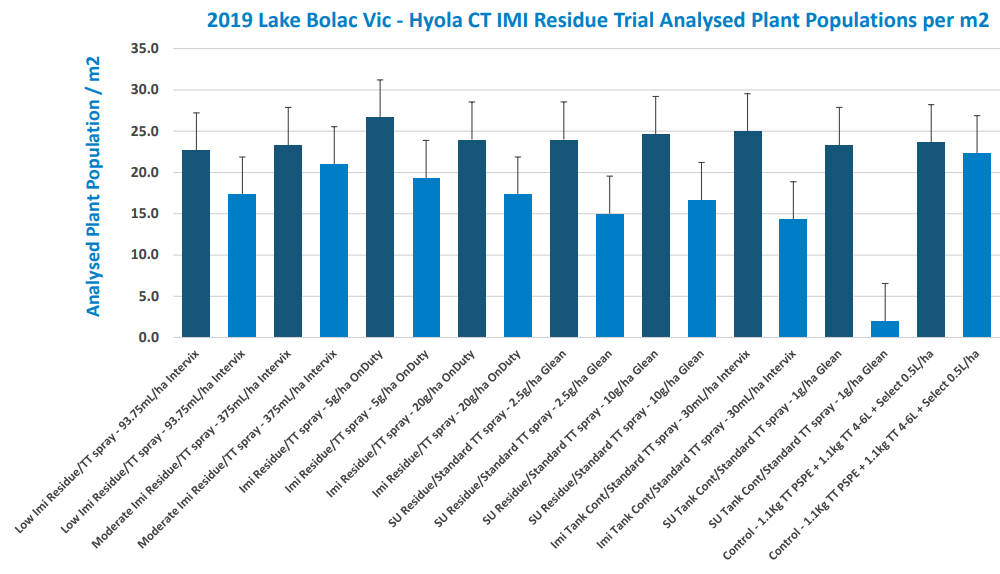
ANALYSED PLANT POPULATIONS PER M2
ANALYSED PLANT POPULATIONS PER M2
ANALYSED PLANT POPULATIONS PER M2
ANALYSED PLANT POPULATIONS PER M2
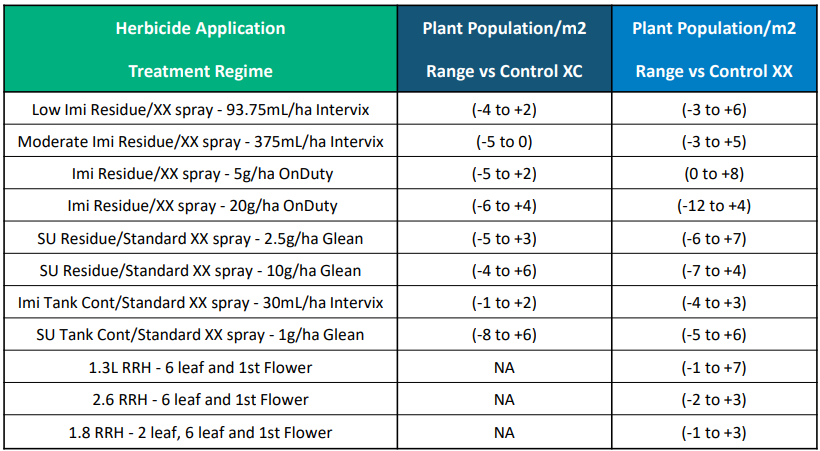
ANALYSED PLANT POPULATION RESULTS SUMMARY
ANALYSED PLANT HEIGHT (CM)
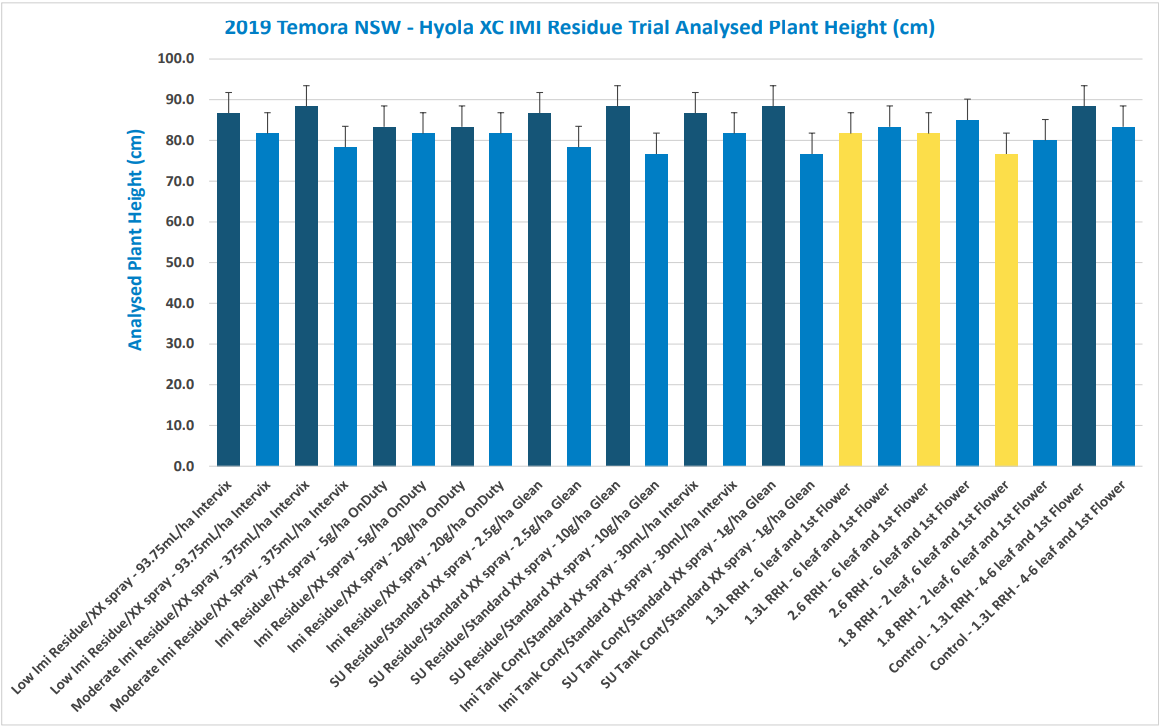
ANALYSED PLANT HEIGHT (CM)
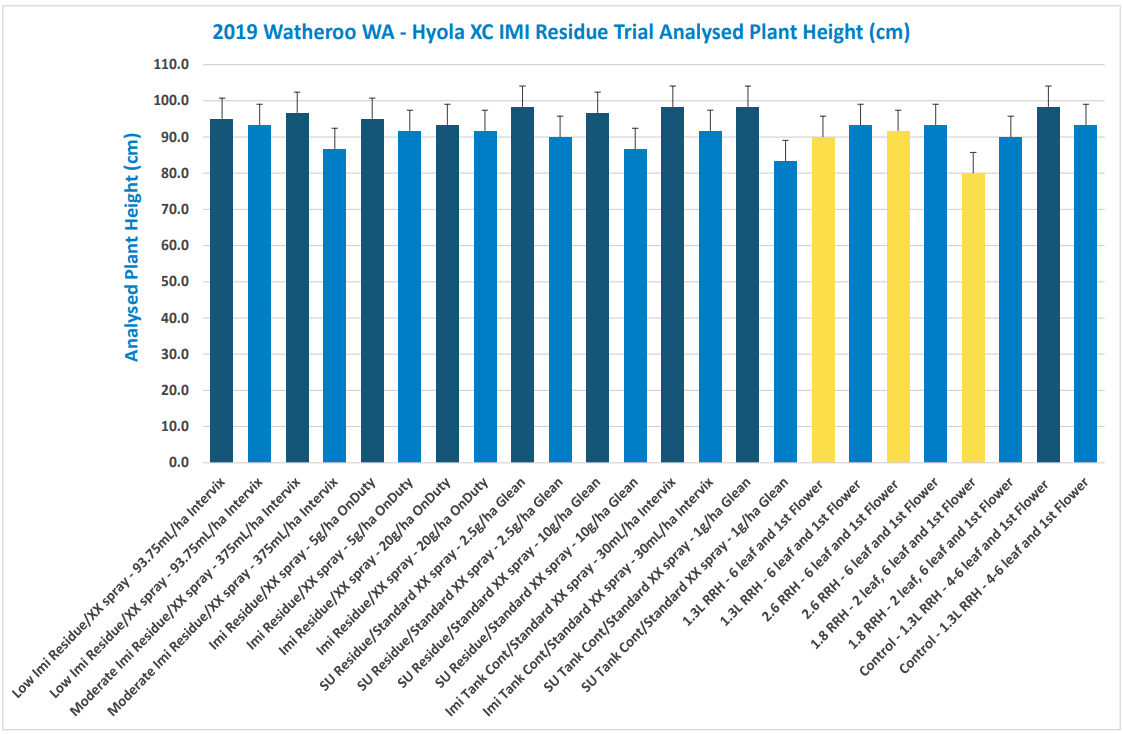
ANALYSED PLANT HEIGHT (CM)
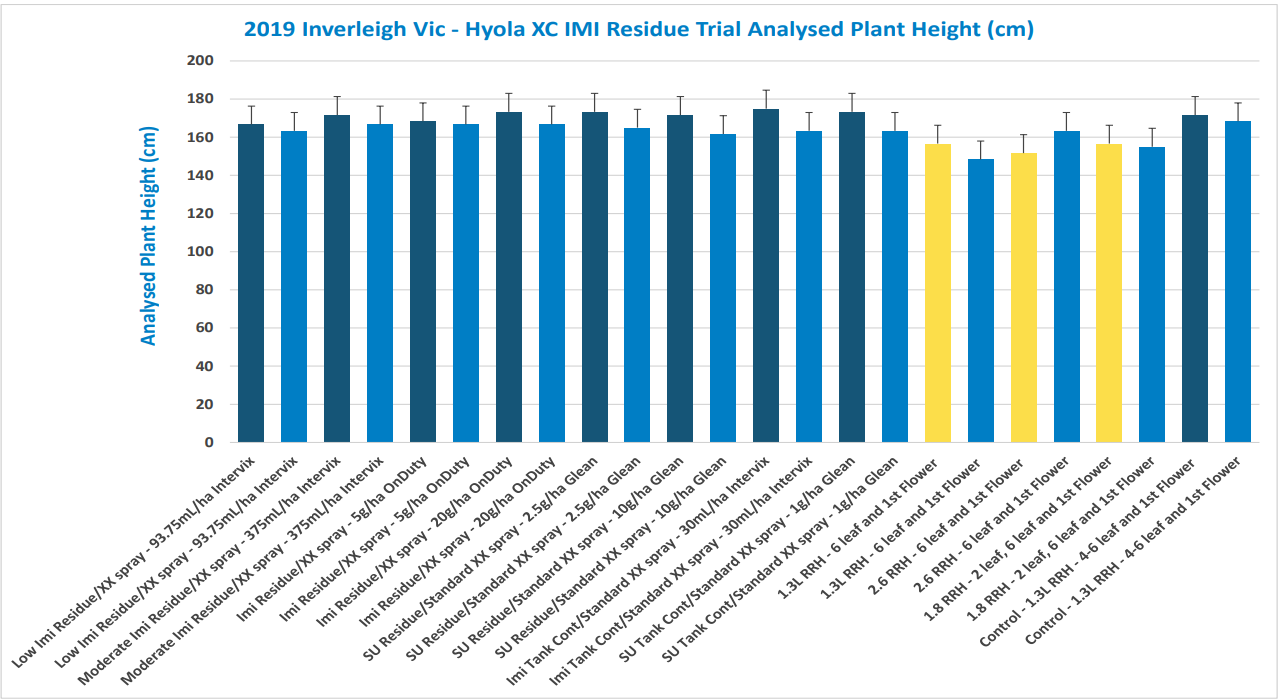
ANALYSED PLANT HEIGHT (CM)
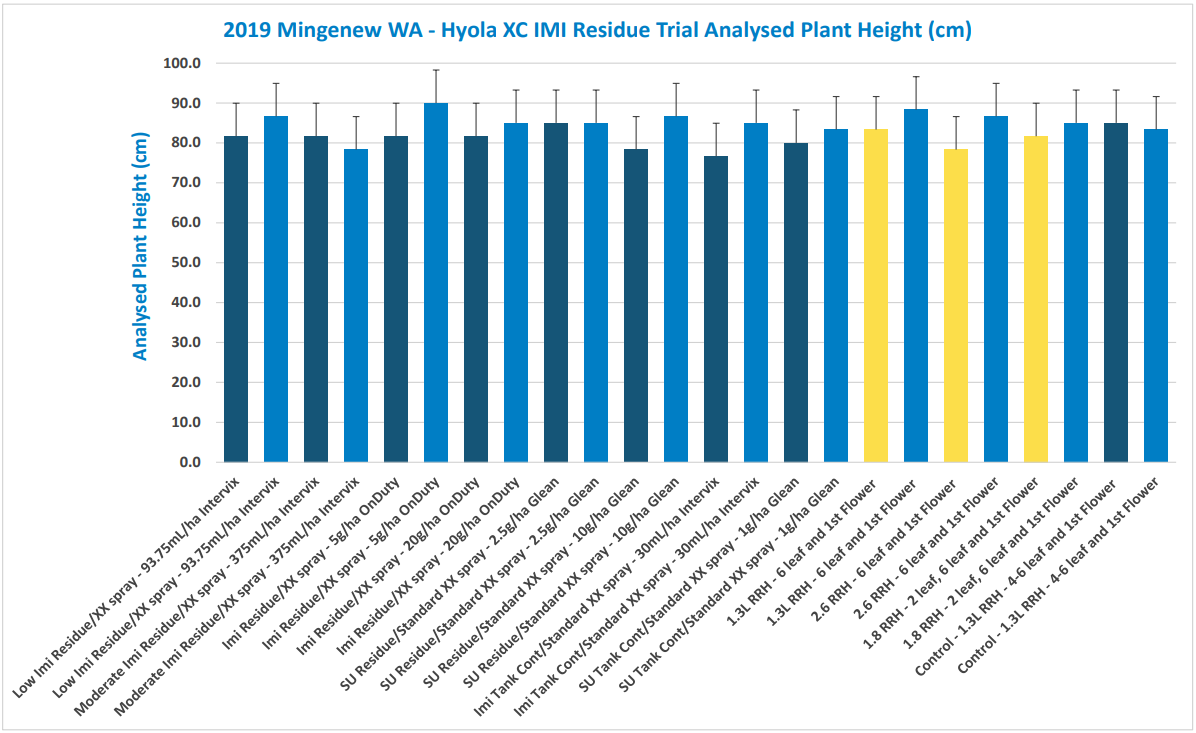
ANALYSED PLANT HEIGHT (CM) RESULTS SUMMARY
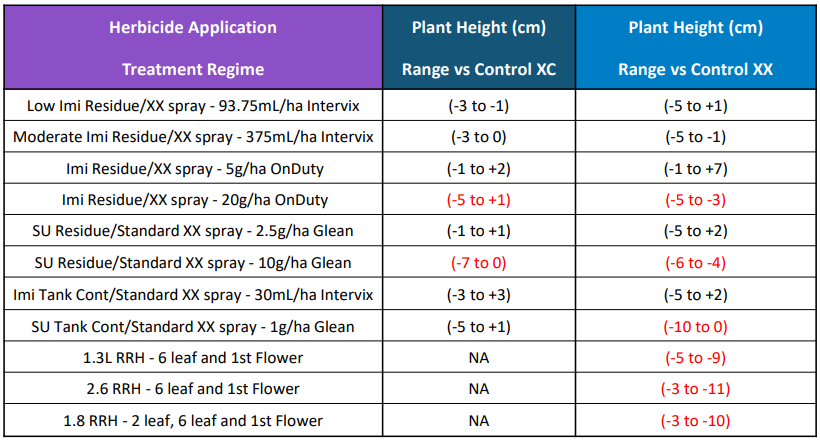
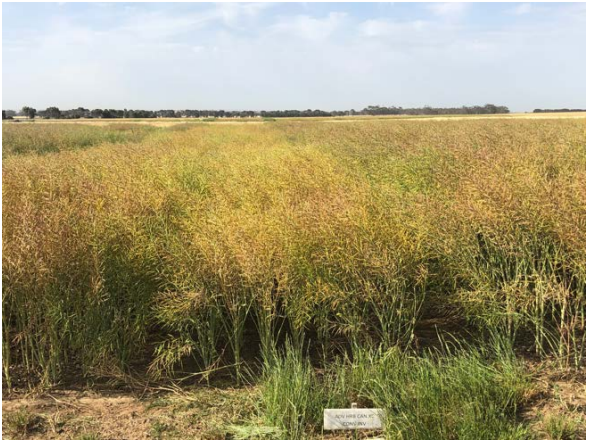
ANALYSED GRAIN YIELD (T/HA)
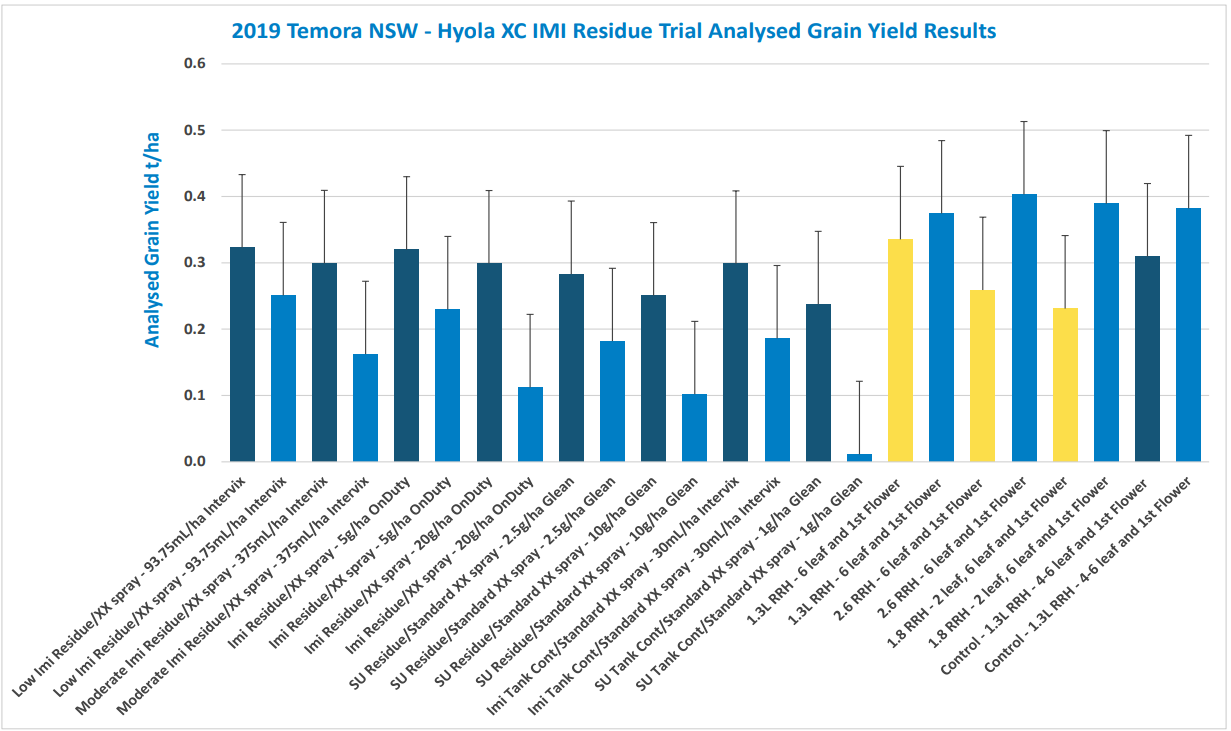
ANALYSED GRAIN YIELD T/HA
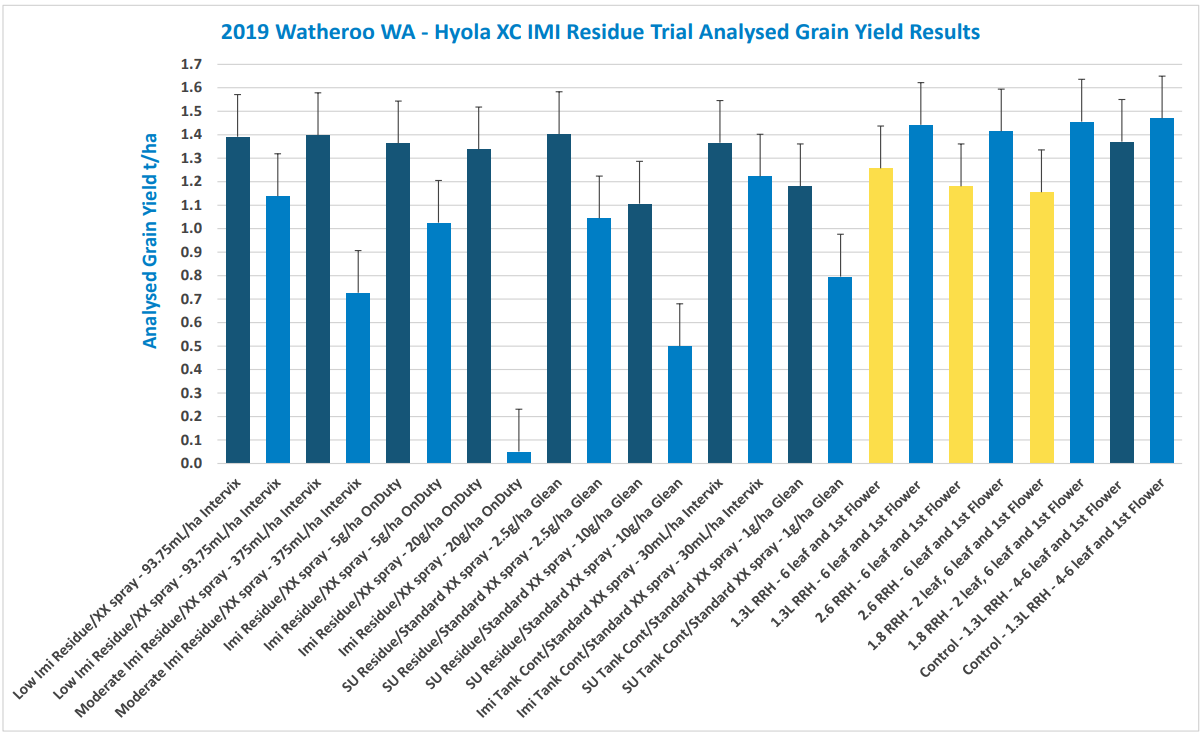
ANALYSED GRAIN YIELD T/HA
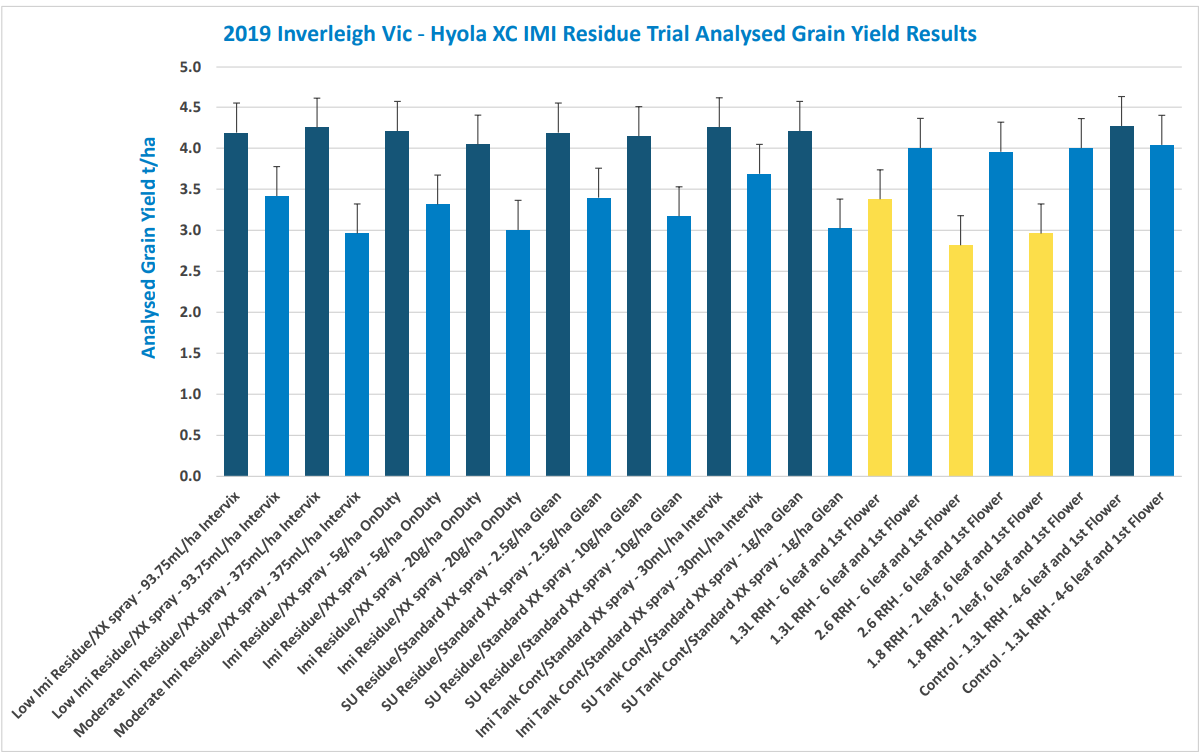
ANALYSED GRAIN YIELD T/HA
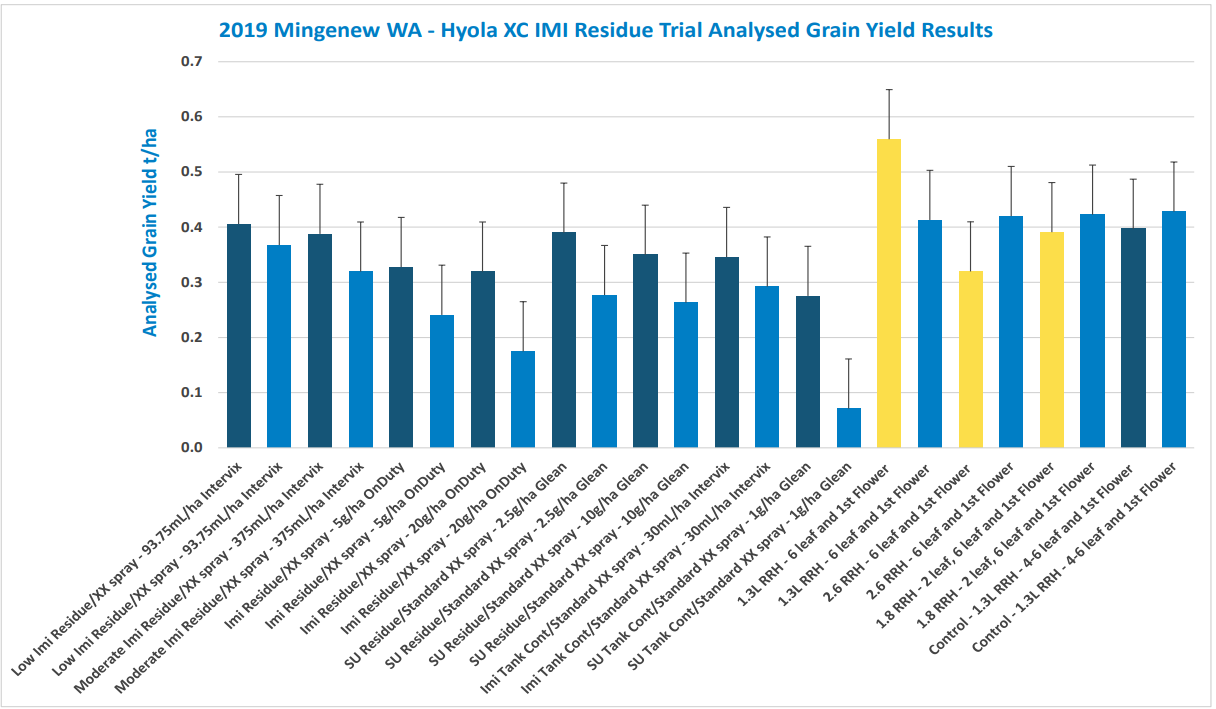
ANALYSED GRAIN YIELD T/HA RESULTS SUMMARY
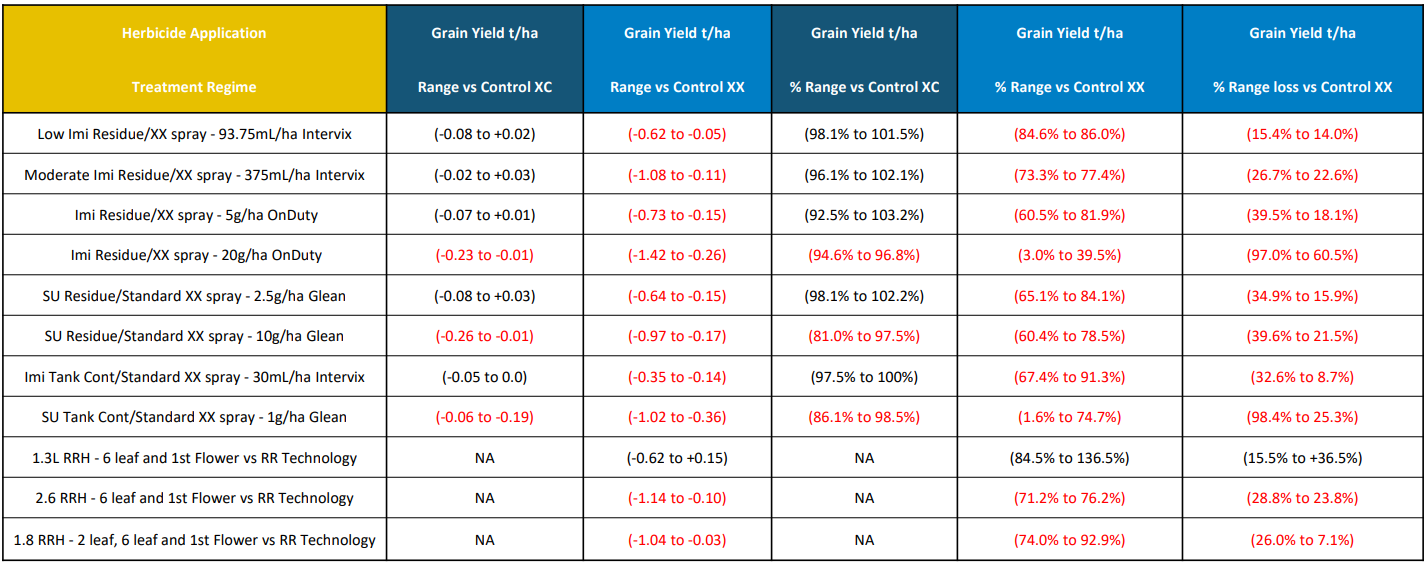
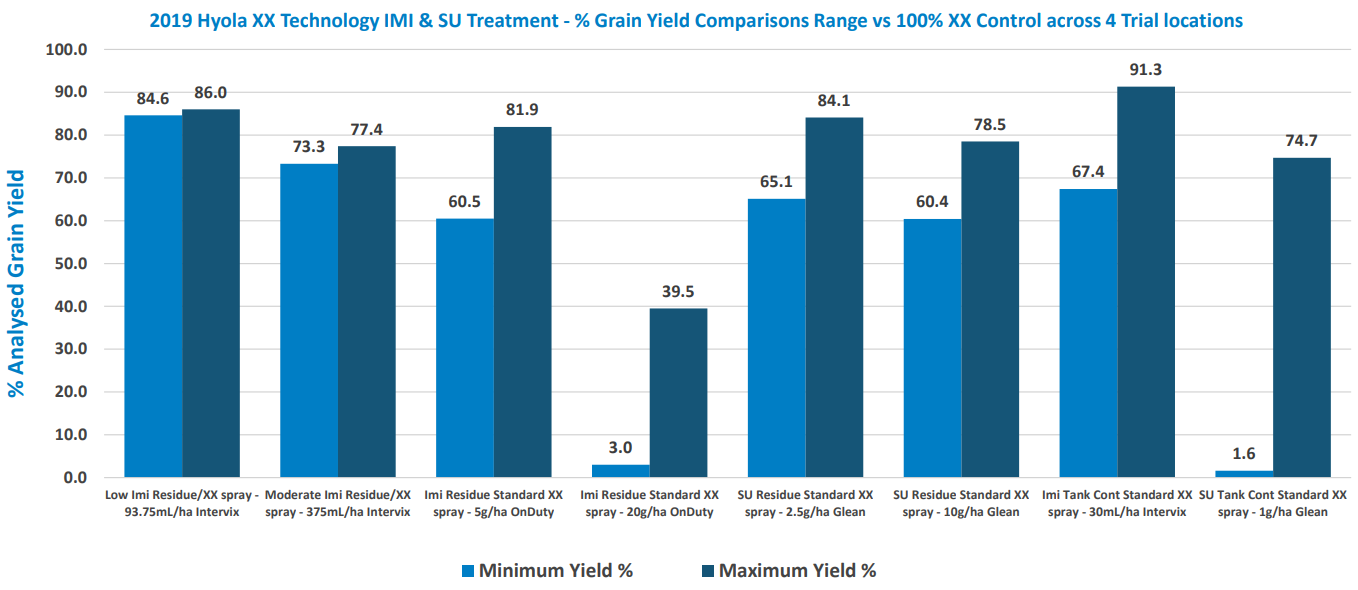
XX % RANGE OF YIELD RESPONSES VS 100% XX CONTROL
MEAN GRAIN OIL%
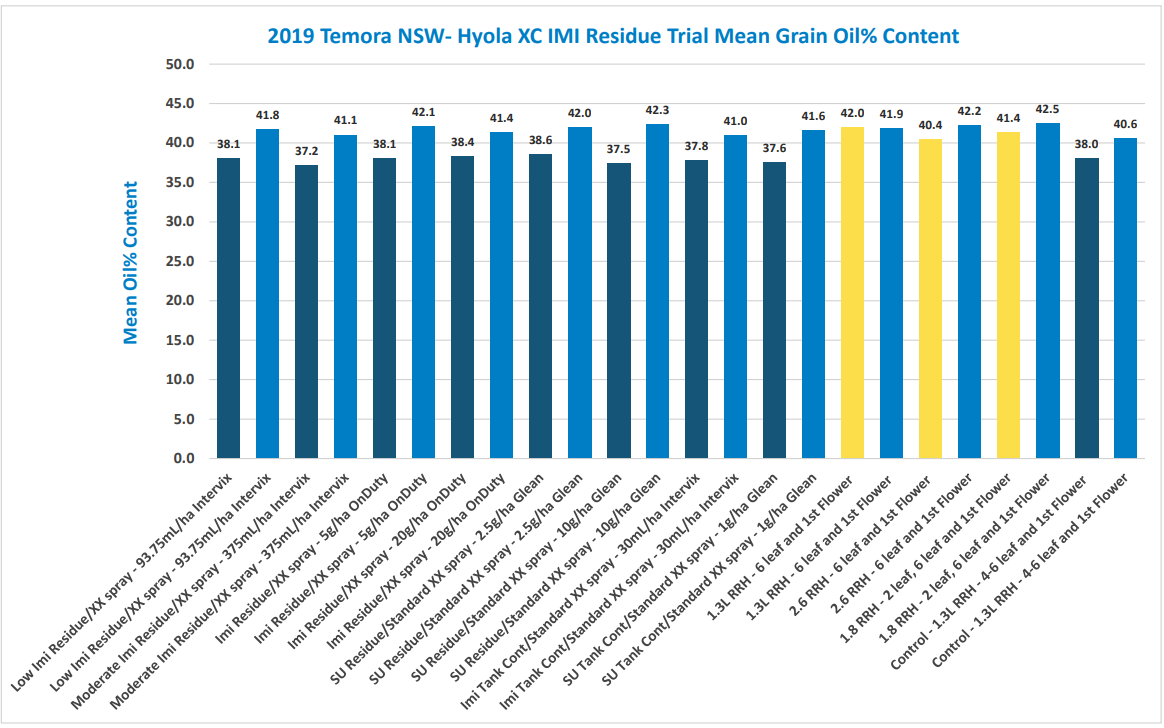
MEAN GRAIN OIL%
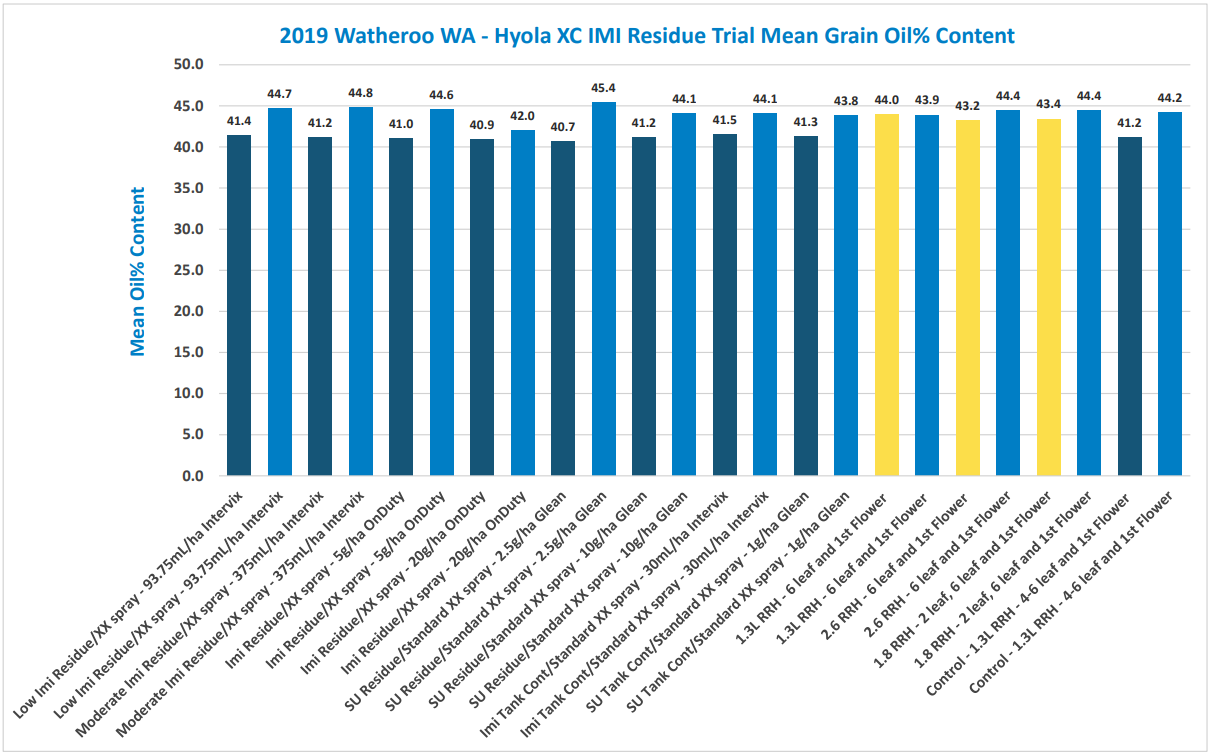
MEAN GRAIN OIL%
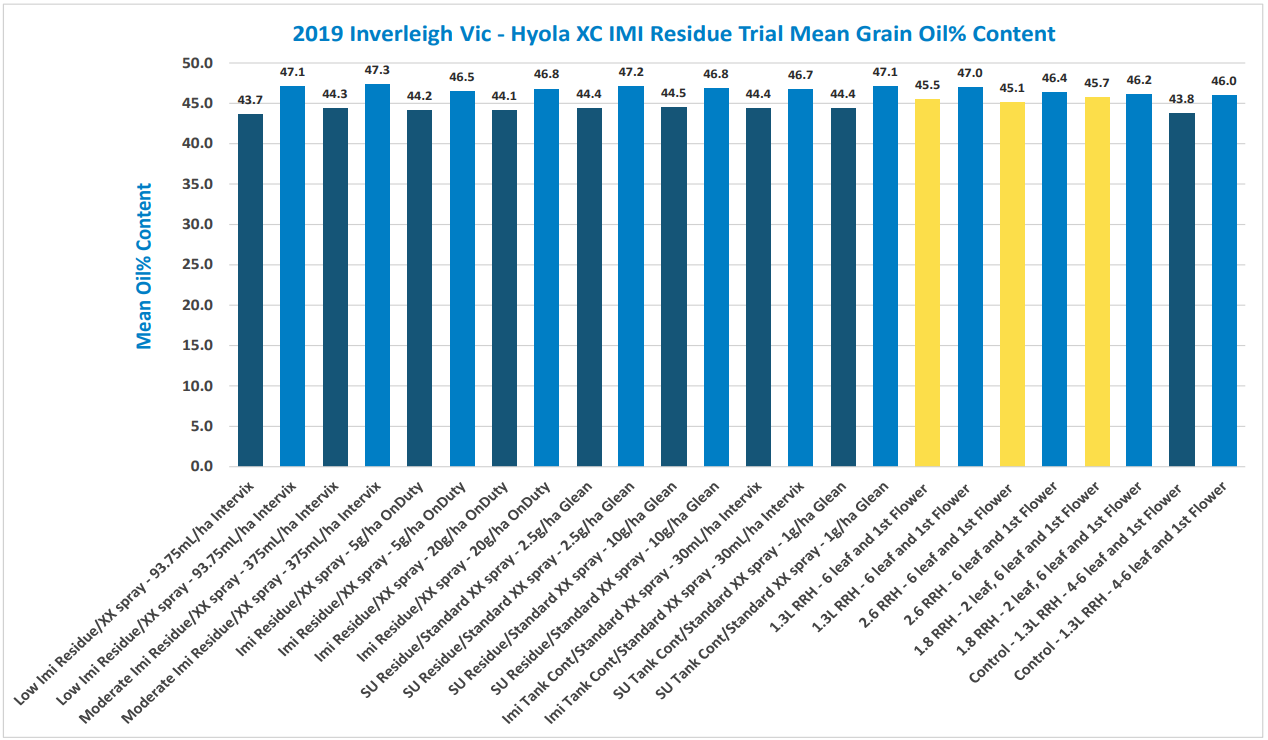
MEAN GRAIN OIL%
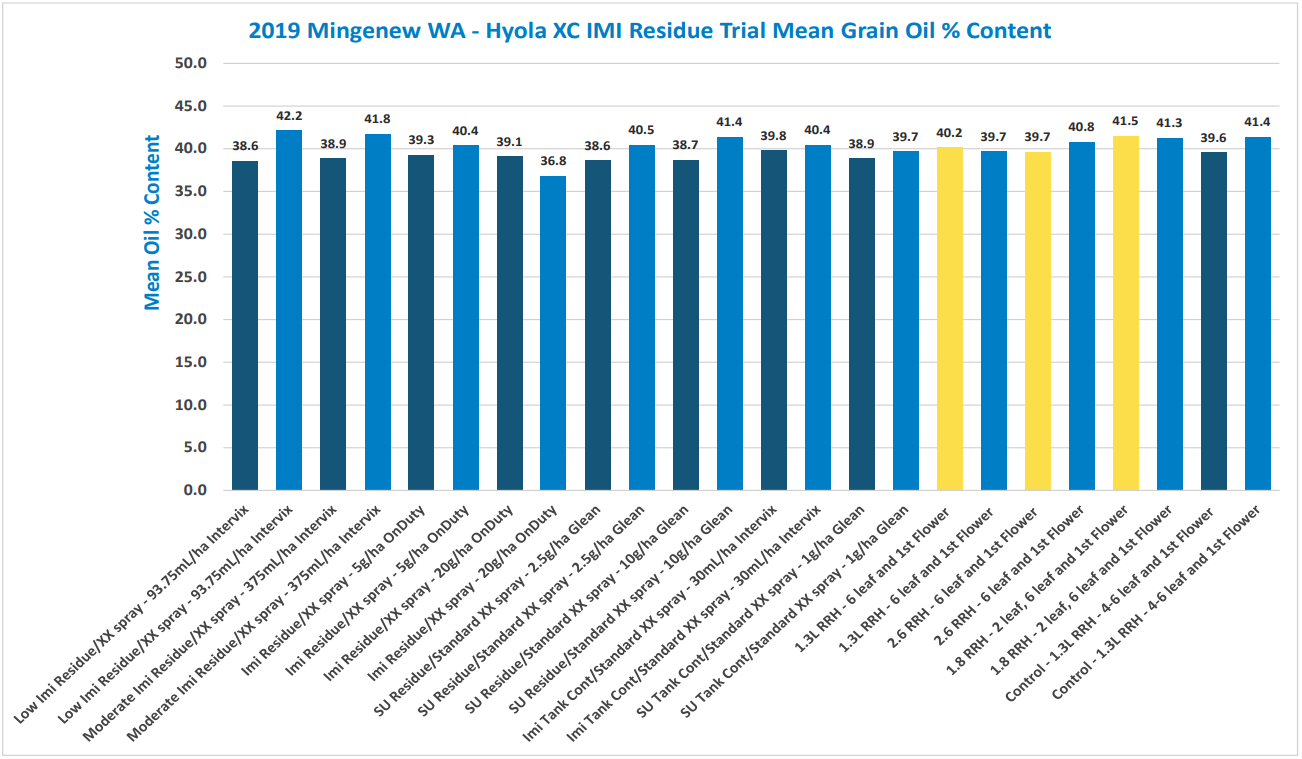
GROSS RETURNS $/HA
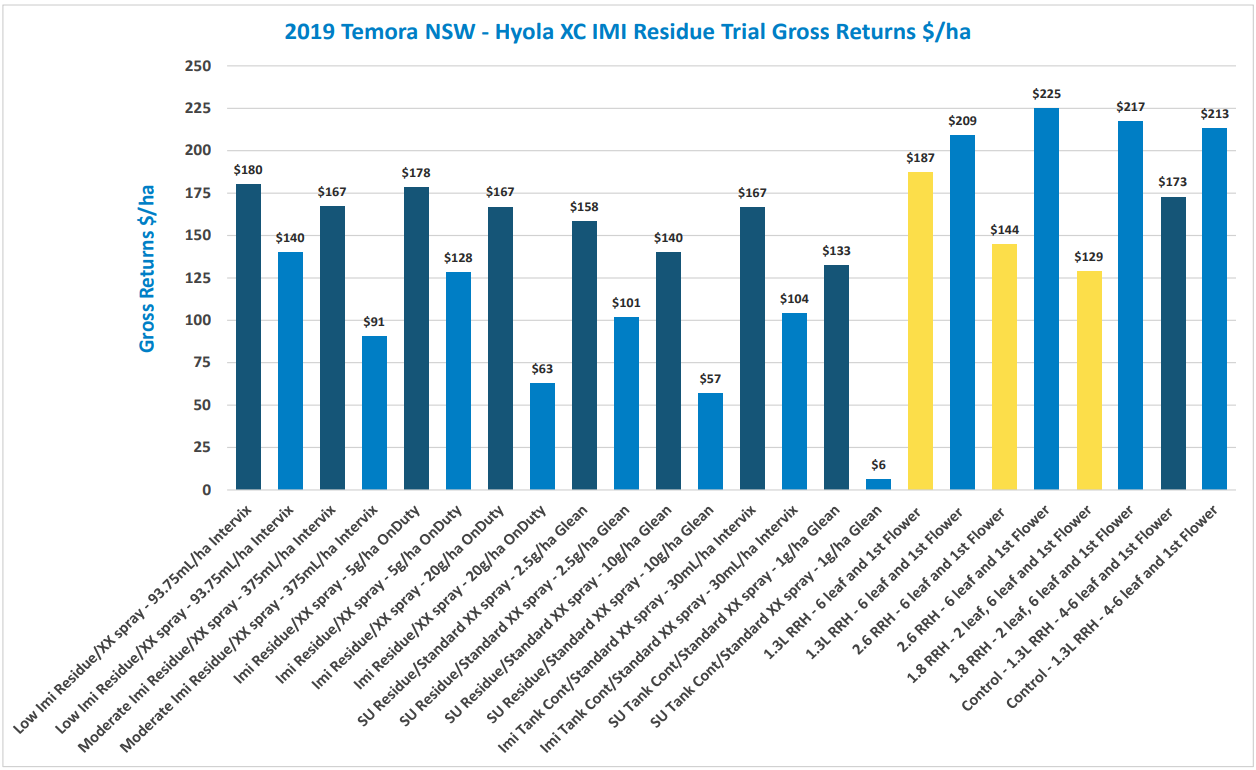
GROSS RETURNS $/HA
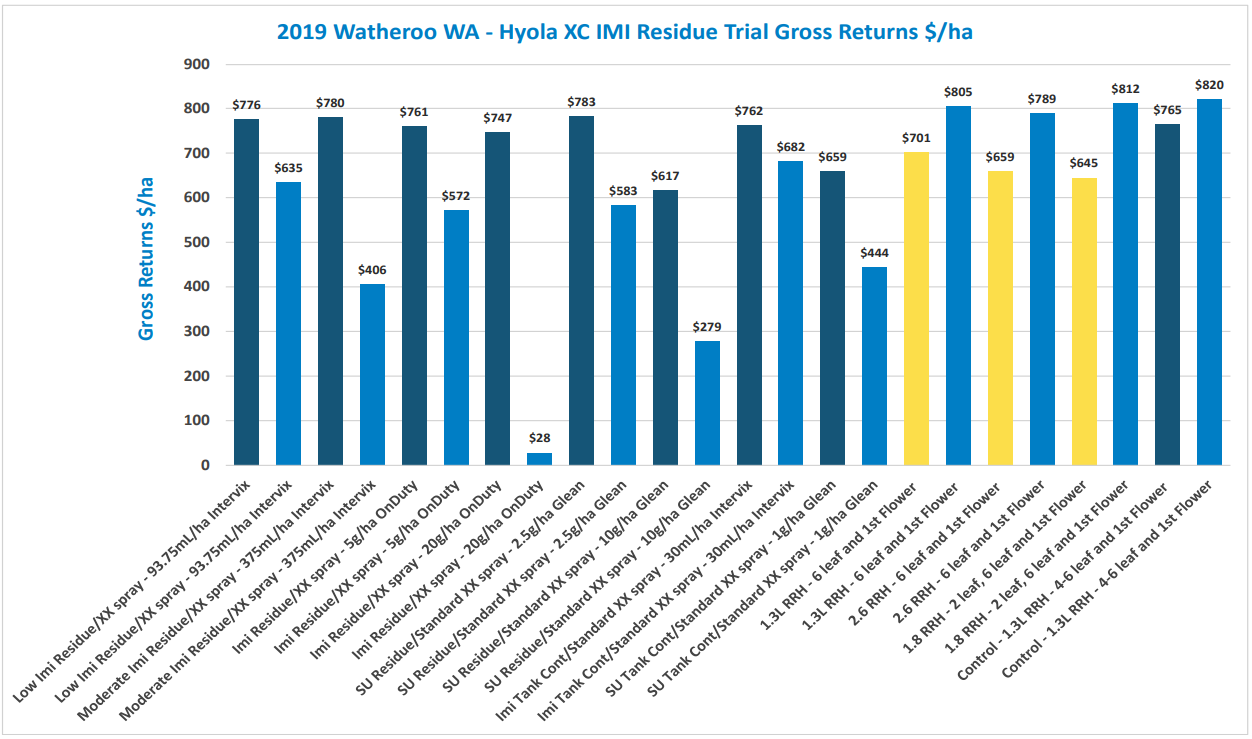
GROSS RETURNS $/HA
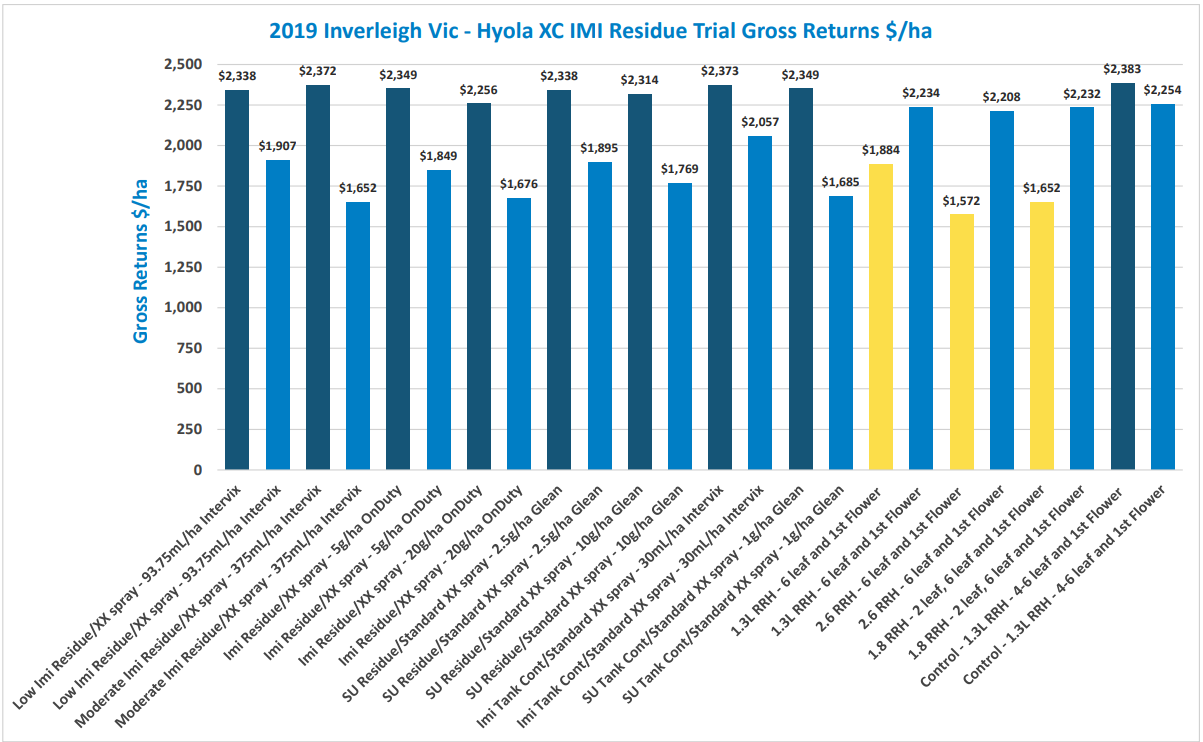
GROSS RETURNS $/HA
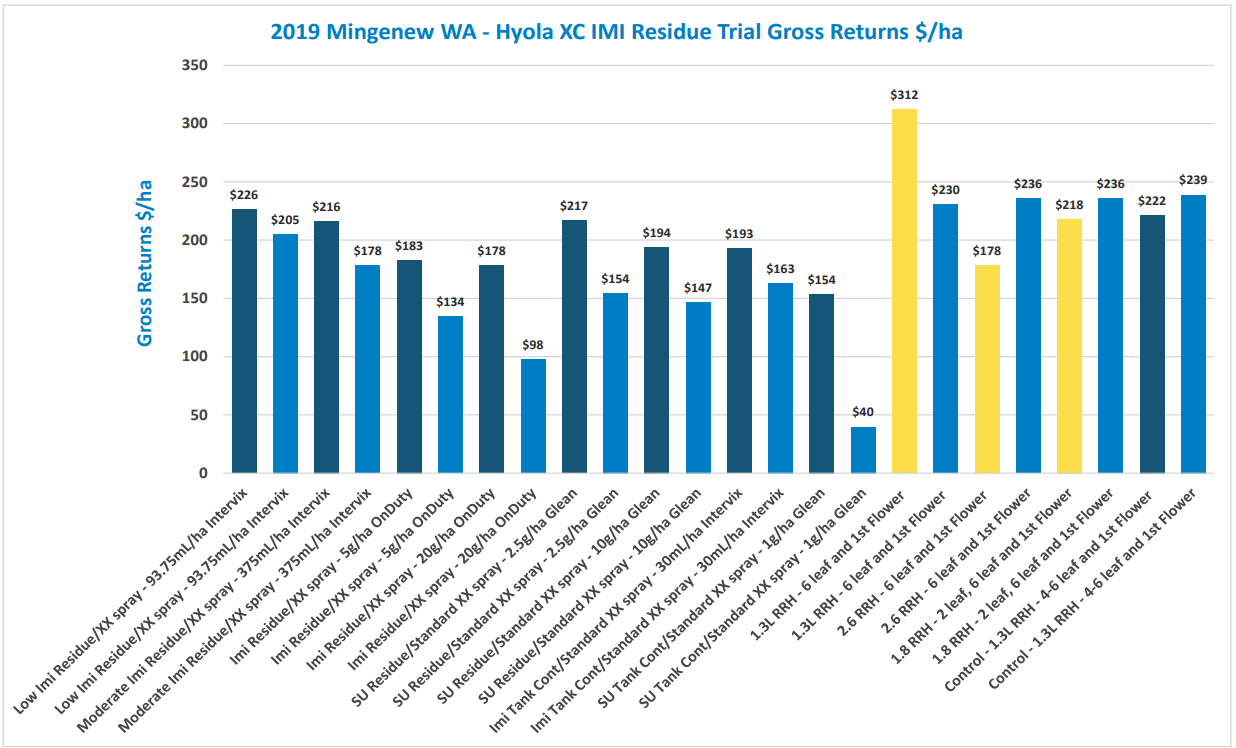
GROSS RETURNS $/HA RESULTS SUMMARY