
Download The


Oats agronomy
Soil selection
Oats is adaptable to a wide range of soils and performance will be in proportion to soil fertility and available moisture. Avoid shallow, hard setting soils and light soils which have a low water holding capacity. Oats is relatively tolerant of acid soil, being more tolerant than wheat and barley. Growth will be adversely affected when soil pH is below 5.3.
Soil salinity
Salinity, primarily caused by excess sodium chloride (NaCl or salt) in the soil, is a concern in many agricultural areas. Excessive soil salts can reduce the performance of oats. By comparison oats is substantially less tolerant to salt than barley. However, oats is slightly more tolerant than sorghum. The reference text ‘Oat Science and Technology’ edited by Marshall and Sorrells (1992) quotes data indicating a 10% yield reduction when soil salinity reaches 5 dS/m. A 50% reduction in yield is likely when soil salinity reaches 8-10 dS/m.
Sowing depth
Seed should be placed deep enough to give it adequate moisture, but in general should be less than 7.5cm (3 inches) particularly with small seeded varieties.
Row spacing
Winter cereals are traditionally sown on a narrow row spacing of 15cm (6 inches) or 23cm (9 inches) to promote ground cover and suppress weed growth. Some farmers and researchers are now questioning this tradition of relatively narrow rows. In some trials, a row spacing of 76cm (30 inches) has assisted in minimising leaf rust on susceptible varieties. In areas where weeds are not a problem, or can be controlled, a wider row spacing may be worth trying.
The advantages of wider rows are:
1. Reduced trampling losses during grazing
2. A more open crop canopy that will be less favourable to rust development
3. Potential to reduce sowing rate
Sowing time
Due to the wide range of oat varieties avaiIable, it is possible to choose one suitable for sowing in the beginning of autumn. Not all varieties can be sown this early. It may be suitable to sow oats as late as early winter, although this may vary in Southern Australia. Refer to local departmental guidelines for variety choices and sowing times. Avoid early sowings of leaf rust susceptible varieties and varieties sensitive to sowing into very warm soil.
Is soil temperature important?
Soil temperature at sowing time is important. If the soil is too warm, germination will be delayed and there may be a very poor plant establishment. Sensitivity to soil temperature does vary between varieties but in general, the ideal soil temperature for germination and establishment of oats is 15-23°C. Some varieties can be successfully sown into soil above 25°C, but it is important to find out and not just assume it will be all right. Soil temperature will vary during the day and for oats it is better to measure the maximum daily soil temperature. To establish the daily maximum, check soil temperature at mid-afternoon. Use a spike type thermometer, placing the ‘sensing’ area of the thermometer at the anticipated sowing depth. Proceed with sowing when the soil temperature, over a number of days, is within the acceptable level for the particular variety
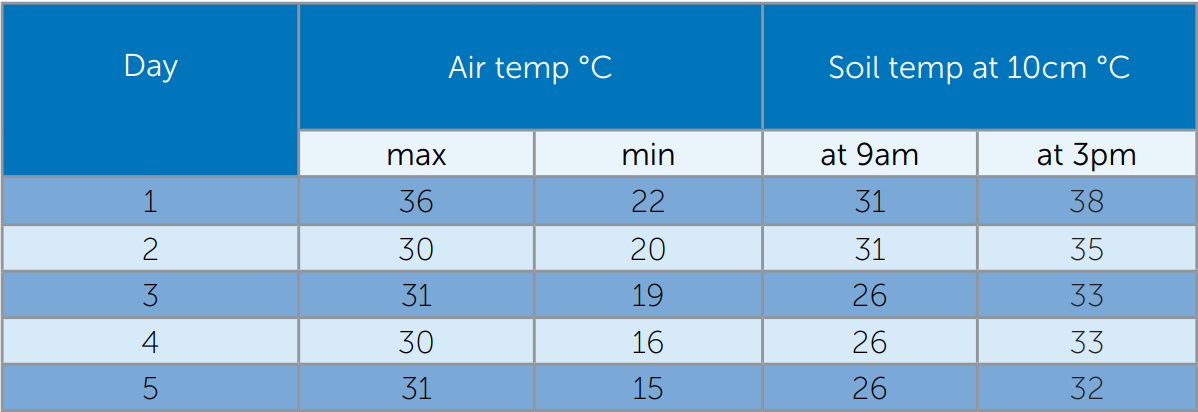
It is important to note that even with the combination of cool nights and daily maximum air temperatures of 30°, germination for some varieties can be depressed due to high soil temperature (Marshall and Sorrells 1992). Table 1 illustrates this further with some Australian autumn data clearly showing the large difference between morning and mid-afternoon soil temperatures. The soil temperatures listed were taken at a depth of 10cm. At a more common sowing depth of 5cm, the 3pm temperature would be expected to be even higher. Note also that the soil temperature, even at 10cm, can exceed the daily maximum air temperature.
Table 1: Comparison of some air and soil temperature data measured over successive days.
Sowing rates
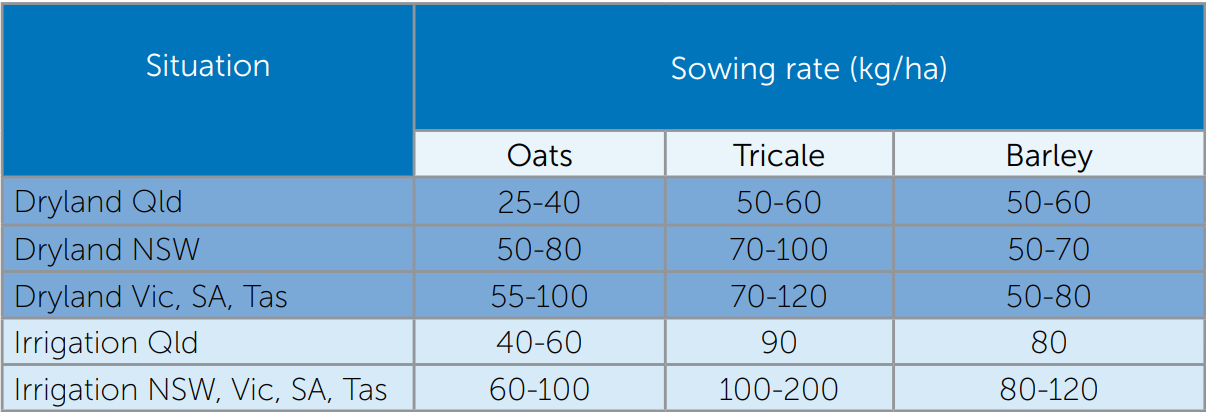
Table 2 provides a general guide to sowing rates for the most common winter cereal forages.
Table 2: A general guide to sowing rates for cereal forages. Consult a local advisor for more precise recommendations.
Fertiliser requirements
A starter fertiliser (containing nitrogen and phosphorus) may assist oat establishment and early growth. The phosphorus can help plants develop better root systems. This may mean plants are well anchored at an earlier age and the first grazing can occur when plants are at the desired height. Nitrogen is important for crop growth and forage protein content.
If soil nitrogen levels are not known, soil tests should be carried out or fertiliser applied to strips of the paddock and subsequent crop growth observed. To assist with calculations, a crop of oats with 22% protein will remove 35kg of nitrogen (N) per tonne of dry matter.
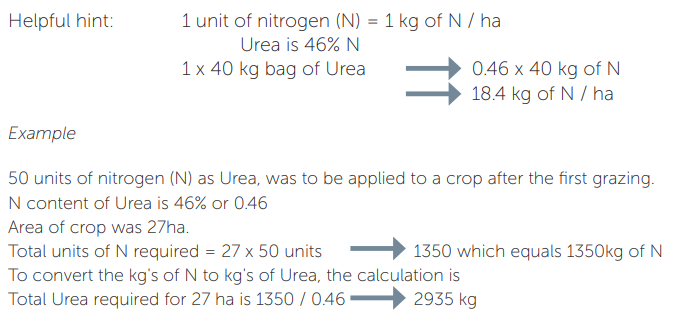
This becomes a significant cost. To ensure the most benefit, drill fertiliser into the soil, apply just before imminent rainfall, or irrigate after application.
Weed control
Broadleaf weeds such as wild turnip (Brassica tournefortii), pigweed (Portulaca oleracea) and various thistles, can be controlled with selective herbicides. Slashing after grazing is an alternative means of preventing unpalatable weeds from seeding. In recent years, some oat varieties have shown adverse side effects to particular herbicides, registered for use on oats. This means that even though a herbicide is registered for general use on oats, the chemical may damage some varieties.
Current recommendations are available from government advisors or chemical suppliers. New South Wales Agriculture conducts herbicide screening trials, using a range of winter crops. The results are updated each year in the NSW Agriculture publication, ‘Cultivar x Herbicide Screening’. The Pacific Seeds variety Taipan is adversely affected by the herbicide Tigrex®. Taipan is damaged by 2,4-D amine if excess chemical is applied, such as overlapping of spray application.
Variety selection
All current Pacific Seeds oat varieties are covered by Plant Breeder’s Rights (PBR). Plant Breeder’s Rights are a form of intellectual property where a particular variety is registered and protected under the Plant Breeder’s Rights Act 1994.
If you purchase a variety protected by PBR, there is no restriction on using the seed on your own farm and retaining a portion of seed produced for your own on farm purposes such as re-sowing. However a variety protected by PBR must not be produced and re-sold unless you are licensed to do so. There can be harsh penalties for those found in breach of PBR legislation.
The safest way to ensure you are purchasing good quality Pacific Seeds oat seed is by doing so through retailers who source the product from licensed Pacific Seeds oat associates. By doing so you can be assured of varietal purity, physical purity and seed germination.