
Agronomist & consultant detail
The evidence behind Hyola Badger XX
The detail layer for agronomists and consultants: named comparators, trial evidence, oil and quality, disease ratings and agronomic specifics. Top yields in the Glyphosate LRZ–MRZ, with higher oil than every named competitor.
herbicide
XX, TruFlex glyphosate tolerant
status
Commercial launch, Autumn 2027 planting
Target segment
LRZ–MRZ Glyphosate
SEED TREATMENT
XX, TruFlex glyphosate tolerant
Lead Claims
01
Top yields in Glyphosate LRZ–MRZ.
02
Higher oil than every named competitor.
03
Stands tall, builds yield to harvest.
04
PodShield™: pods that hold longer, paddock to header.
113
GRDC NVT 2025 GLY MET yield index, top of the 12-trial WA LRZ–MRZ AgZone mean, ahead of every named alternative.
+1.5%
Up to 1.5% more oil than every named competitor across the LRZ–MRZ WA AgZone mean (~0.8 to 1.5% range).
105
Grain-yield index by harvest, drone-tracked against Nuseed Hunter TF = 100. Behind early, ahead by harvest.
Badger XX is designed for growers in low-to-medium rainfall paddocks running the TruFlex chemistry rotation. In high-biomass HRZ paddocks its moderate lodging resistance under waterlogged conditions means it is best adapted to LRZ–MRZ. Badger XX is available only with Elite seed treatment.
01 Yield evidence
Where it leads
Across 12 GRDC NVT GLY MET trials in WA LRZ–MRZ in 2025, Badger XX indexed 113, ahead of Nuseed Hunter TF (111), BASF InVigor LR 4540P (111), Pioneer PY428R (107), Nuseed Emu TF (107) and Pioneer PY323G (103).
GRDC NVT 2025 GLY MET yield index

| Product | LRZ - MRZ | MRZ - HRZ |
|---|---|---|
| Hyola Badger XX | 113 | 112 |
| BASF InVigor LR 4540P | 111 | 109 |
| Nuseed Hunter TF | 111 | 108 |
| Pioneer PY428R | 107 | 106 |
| Nueseed EMU TF | 107 | 101 |
| Pioneer PY323G | 103 | 101 |
Source: GRDC National Variety Trials 2025 GLY MET. NVT Long Term MET analysis. Reference to NVT does not imply NVT endorsement.
Important to know
While yield results in HRZ zones are very positive, Badger XX’s moderate lodging resistance under waterlogged conditions means it is best adapted to LRZ–MRZ.
02 Oil & Quality
Where it leads
Badger XX mean oil sits ~0.8 to 1.5% higher than every named competitor in LRZ–MRZ (AgZones 1, 2, 4 and 5), and ~1% higher than every named competitor in MRZ–HRZ (AgZones 2, 3, 5 and 6).
GRDC NVT 2025 GLY MET mean oil % at 6% MC
| Product | LRZ - MRZ | MRZ - HRZ |
|---|---|---|
| Hyola Badger XX | 47.02 | 48.21 |
| BASF InVigor LR 4540P | 46.18 | N/A |
| Nuseed Hunter TF | 46.08 | 47.29 |
| Pioneer PY323G | 45.97 | N/A |
| Nueseed EMU TF | 45.55 | N/A |
| BASF InVigor LR 4540P | N/A | 47.10 |
Source: GRDC National Variety Trials 2025 GLY MET. NVT Long Term MET analysis. Reference to NVT does not imply NVT endorsement.
Important to know
The comparative claim is segment-specific (Nuseed Hunter TF and BASF InVigor LR 4540P are the named LRZ–MRZ comparators). For some end-use markets (e.g. stockfeed) the oil bonus may not apply.
03 Regional yield (Innovation Systems Trials)
Where it leads
Badger XX is the clear standout in WA in the Pacific Seeds 2024–25 Innovation Systems Trials regional means, ahead of the named comparator set by 0.17 t/ha or more. In VIC/SA and NSW/Qld the variety sits competitive. The WA AgZones are where Badger XX leads decisively.
Innovation Systems Trials 2024–25 regional means (t/ha)
Pioneer PY428R was not included in the 2024–25 set; Pioneer PY323G was tested in 2024 sites only and is excluded for sample-size consistency. Refer to the GRDC NVT yield charts for PY428R and PY323G rankings. Source: Pacific Seeds Innovation Systems Trials 2024–25, 29-environment regional means. Compare across more varieties at pacificseeds.com.au/canola-yield-tool.
Important to know
The comparative claim is segment-specific (Nuseed Hunter TF and BASF InVigor LR 4540P are the named LRZ–MRZ comparators). For some end-use markets (e.g. stockfeed) the oil bonus may not apply.
04 Setting expectations early
Where it leads
Badger XX is slower to emerge and slower to establish ground cover than Nuseed Hunter TF and other TruFlex hybrids. Expect to see fewer plants up at establishment and a more open early canopy when planting the same target plant population. The canopy builds through elongation to flowering stages, and by harvest Badger XX finishes ahead of Hunter TF on both yield and oil, validated by drone-tracked phenology across multi-environment trials.
What to expect in the paddock
The slower start is to be expected; it is driven by the background genetics, and the same pattern has shown consistently across Pacific Seeds and third-party trials. The message is plain: slow out of the ground, strong at harvest.
Drone-tracked canopy & yield across crop stages, indexed to Nuseed Hunter TF = 100
Indexed to Nuseed Hunter TF = 100, Badger XX sits at 81 for green leaf cover in June, 104 for flower and pod cover in September, and 105 for grain yield in November to December. The physiology: Badger XX partitions less into early leaf and more into branches, flowers and pods, with multi-basal branching, longer racemes and extended pods. Source: Pacific Seeds Innovation Systems Trials 2025, drone-tracked phenology (DJI Matrice 4E), replicated across Australia.
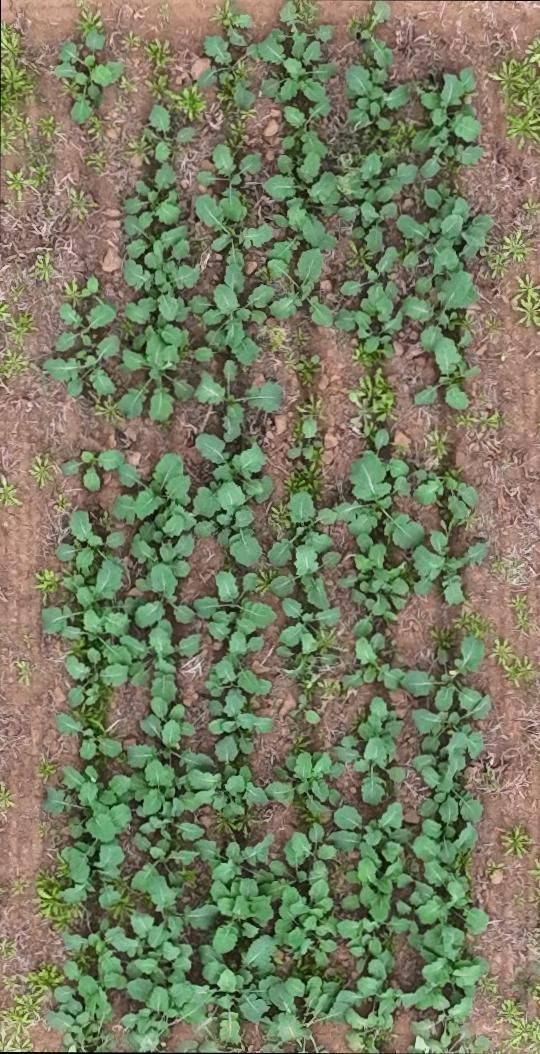
Badger XX green leaf canopy at establishment. The early-canopy gap is real and expected.
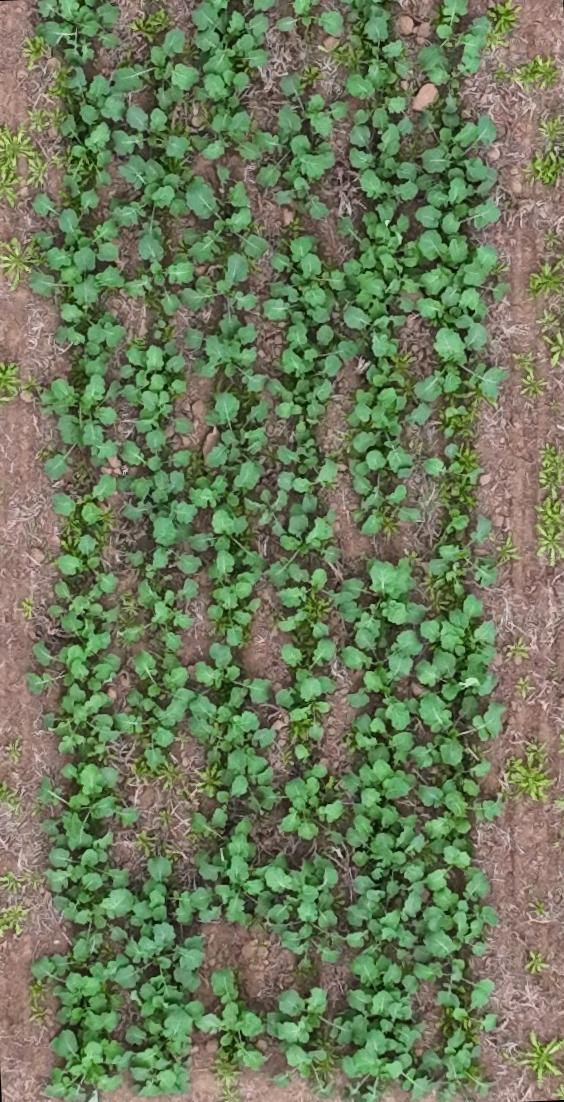
Nuseed Hunter TF, same stage. Badger XX builds through to finish ahead on yield and oil by harvest.
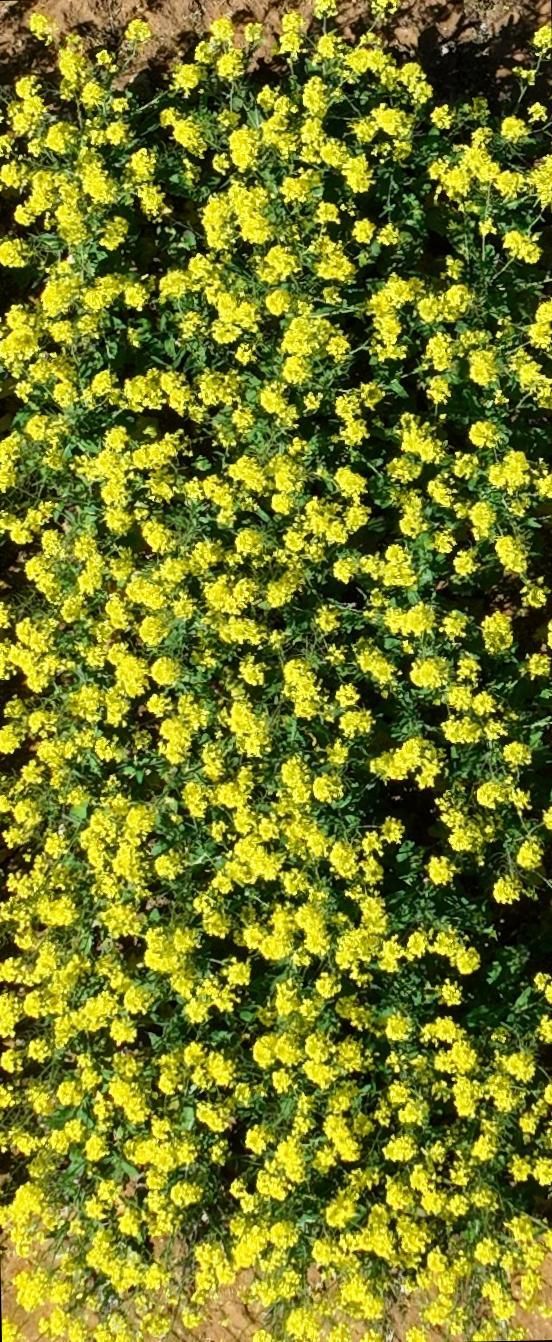
Badger XX at flowering. Starts behind on early canopy, then draws ahead in canopy and pod cover.
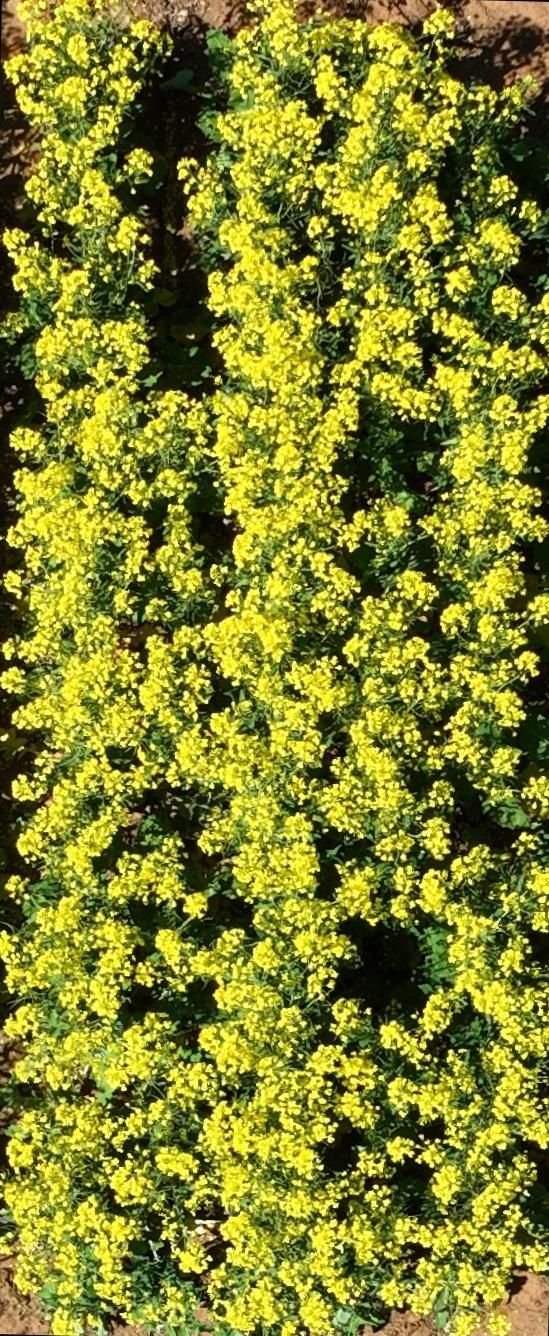
Nuseed Hunter TF, same trial. The early-stage gap closes and reverses by harvest.
Pacific Seeds Innovation Systems Trials 2025.
05 PodShield™: pods that hold longer
Where it leads
Badger XX carries the PodShield trait. PodShield holds pods intact for longer, even when maturity is delayed or winds increase before harvest. That gives the grower harvest flexibility: direct head, or delay swathing, with less shatter loss and less risk at the end of the harvest. The trait pairs with the medium-tall stature and moderate lodging resistance to carry yield through to the header.
PodShield hybrids are screened by random impact pod testing on a Geno/Grinder, which homogenises randomised field samples and rates them low, moderate or high for shatter tolerance through multi-timed vibration. Testing is replicated across a diverse range of Australian canola environments against a dedicated set of industry controls.
Random impact shatter test. Pods from a current hybrid without PodShield break open and shed seed; PodShield pods stay intact and hold their seed.
Badger XX at pod-fill. Longer pods hold through the direct-harvest window and reduce shatter risk.
Important to know
PodShield positioning is an enhanced generic shatter defence; there is currently no industry standard method for quantifying shatter tolerance. For more detail on how Pacific Seeds classifies shatter tolerance, speak to your Pacific Seeds territory manager.
06 Agronomic specifics
Where it leads
| ATTRIBUTE | VALUE | SOURCE |
|---|---|---|
| Yield Adaptability | 1.0 to 3.5 t/ha; higher yields than Emu TF, PY428R, PY323G, Hunter TF and InVigor LR 4540P in WA | GRDC NVT 2025 GLY MET |
| Maturity | Early-Mid (4): 2–3 days earlier than Nuseed Hunter TF, 2–3 days later than Emu TF | Pacific Seeds Innovation Systems Trials 2024–25 |
| Plant vigour | 7.5; slower to emerge and slower to establish ground cover than Nuseed Hunter TF; the canopy builds through to harvest (see Setting expectations early) | Pacific Seeds Innovation Systems Trials 2024–25 |
| Plant height | Medium-Tall | Pacific Seeds Innovation Systems Trials 2024–25 |
| Lodging resistance | Moderate (excellent standability in LRZ–MRZ growing zones) | Pacific Seeds Innovation Systems Trials 2024–25 |
| Growing zones | LRZ–MRZ (1.0 t/ha to 3.5 t/ha across Australia) | GRDC NVT 2025 GLY MET + Pacific Seeds Innovation Systems Trials 2024–25 |
| ATTRIBUTE | VALUE | SOURCE |
|---|---|---|
| Yield Adaptability | 1.0 to 3.5 t/ha; higher yields than Emu TF, PY428R, PY323G, Hunter TF and InVigor LR 4540P in WA | GRDC NVT 2025 GLY MET |
| Maturity | Early-Mid (4): 2–3 days earlier than Nuseed Hunter TF, 2–3 days later than Emu TF | Pacific Seeds Innovation Systems Trials 2024–25 |
| Plant vigour | 7.5; slower to emerge and slower to establish ground cover than Nuseed Hunter TF; the canopy builds through to harvest (see Setting expectations early) | Pacific Seeds Innovation Systems Trials 2024–25 |
| Plant height | Medium-Tall | Pacific Seeds Innovation Systems Trials 2024–25 |
| Lodging resistance | Moderate (excellent standability in LRZ–MRZ growing zones) | Pacific Seeds Innovation Systems Trials 2024–25 |
| Growing zones | LRZ–MRZ (1.0 t/ha to 3.5 t/ha across Australia) | GRDC NVT 2025 GLY MET + Pacific Seeds Innovation Systems Trials 2024–25 |
Badger XX carries the PodShield trait. PodShield holds pods intact for longer, even when maturity is delayed or winds increase before harvest. That gives the grower harvest flexibility: direct head, or delay swathing, with less shatter loss and less risk at the end of the harvest. The trait pairs with the medium-tall stature and moderate lodging resistance to carry yield through to the header.
PodShield hybrids are screened by random impact pod testing on a Geno/Grinder, which homogenises randomised field samples and rates them low, moderate or high for shatter tolerance through multi-timed vibration. Testing is replicated across a diverse range of Australian canola environments against a dedicated set of industry controls.
Important to know
PodShield positioning is an enhanced generic shatter defence; there is currently no industry standard method for quantifying shatter tolerance. For more detail on how Pacific Seeds classifies shatter tolerance, speak to your Pacific Seeds territory manager.
07 Disease ratings
Where it leads
| FORM | RATING | SOURCE |
|---|---|---|
| Blackleg Saltro Rating | R | GRDC Blackleg Management Guide September 2026 |
| Blackleg Groups | CH | GRDC Blackleg Management Guide September 2026 |
| ATTRIBUTE | VALUE | SOURCE |
|---|---|---|
| Yield Adaptability | 1.0 to 3.5 t/ha; higher yields than Emu TF, PY428R, PY323G, Hunter TF and InVigor LR 4540P in WA | GRDC NVT 2025 GLY MET |
| Maturity | Early-Mid (4): 2–3 days earlier than Nuseed Hunter TF, 2–3 days later than Emu TF | Pacific Seeds Innovation Systems Trials 2024–25 |
| Plant vigour | 7.5; slower to emerge and slower to establish ground cover than Nuseed Hunter TF; the canopy builds through to harvest (see Setting expectations early) | Pacific Seeds Innovation Systems Trials 2024–25 |
| Plant height | Medium-Tall | Pacific Seeds Innovation Systems Trials 2024–25 |
| Lodging resistance | Moderate (excellent standability in LRZ–MRZ growing zones) | Pacific Seeds Innovation Systems Trials 2024–25 |
| Growing zones | LRZ–MRZ (1.0 t/ha to 3.5 t/ha across Australia) | GRDC NVT 2025 GLY MET + Pacific Seeds Innovation Systems Trials 2024–25 |
Important to know
PodShield positioning is an enhanced generic shatter defence; there is currently no industry standard method for quantifying shatter tolerance. For more detail on how Pacific Seeds classifies shatter tolerance, speak to your Pacific Seeds territory manager.
08 Sources & methodology
Where it leads
Full source list and methodology
GRDC National Variety Trials 2025 (GLY MET, LRZ–MRZ AgZones 1, 2, 4, 5 and MRZ–HRZ AgZones 2, 3, 5 and 6)
Independent third-party multi-environment yield and oil comparisons against named competitor varieties. Reproducible at app.nvt.grdc.com.au.
Pacific Seeds Innovation Systems Trials 2024–25 multi-environment trials
Per-variety agronomic observations, drone-tracked phenology, multi-environment yield validation.
Pacific Seeds 2025 internal Blackleg screening (provisional)
Saltro, UCI and bare ratings; Blackleg group genotyping.
Pacific Seeds PodShield trait development programme
Geno/Grinder random impact pod testing methodology, replicated across Australian canola growing regions.
GRDC Blackleg Management Guide - Sept 2026
Important note: this is a guide only, to make a fully informed choice, please refer to our Advanta Seeds Pty Ltd specific conditions.
Important to know
PodShield positioning is an enhanced generic shatter defence; there is currently no industry standard method for quantifying shatter tolerance. For more detail on how Pacific Seeds classifies shatter tolerance, speak to your Pacific Seeds territory manager.
