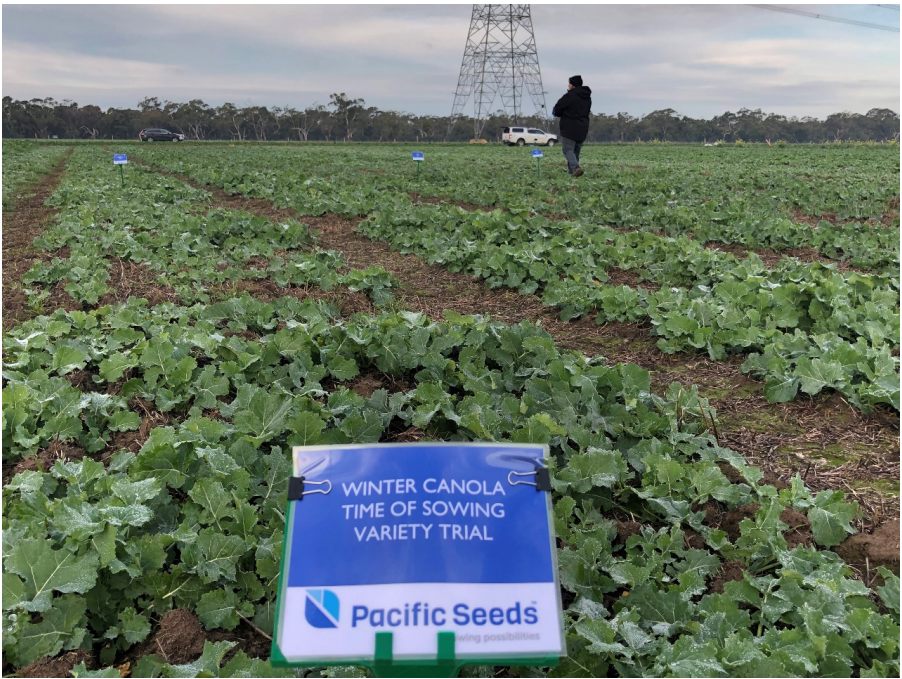
Download The resource


Comparing grain yields of different plant populations of Winter Graze n Grain hybrid CL canola to determine the viability of reduced plant numbers caused by environmental or seasonal conditions
1 Justin Kudnig 2 Pacific Seeds
Key messages
- Winter hybrid canola populations of 25 plants per m2 can provide grain yields equivalent to or higher than 40 plants per m2 depending on time of sowing and seasonal conditions
- Plant populations of approximately 4 to 5 plants/m2 can still yield between 3t/ha to 4t/ha with early time of sowing, adequate Nitrogen supplied during the season on top of existing soil N availability and GSR values being between 400 to 500mm.
- Low populations below 10 plants per m2 leads to higher weed pressure and basal multi-stem branching of plant architecture so there is a requirement for paddock specific strategic herbicide use, resistance management and harvest logistics to be applied.
- The two highest yielding Winter graze n Grain hybrids across all trials were Hyola Feast CL and Hyola 970CL demonstrating the most consistent yield performance across Australian environments.
Key words: Winter type, plant population, hybrid, CL, dual stacked technology, canola, Hyola, grain yield, gross returns, time of sowing, nitrogen management.
Background
As the cropping area of Graze n Grain Winter type canola increases significantly across Australia, (now estimated at 100,000ha) coupled with extraordinary dual purpose gross returns from the grazing and grain components, growers and advisors are seeking for information around some comparisons of lower plant stands vs traditional established recommendations of 25 to 40 plants per m2.
Lower plant populations in Winter canola types can be experienced in both the MRZ and HRZ canola growing regions due to sowing date related adverse environmental conditions or excess early crop insect or mollusc damage, so being able to identify the agronomic pros and cons of having a significantly lower plant establishment than what is considered desirable has been evaluated in these 4 trials.
Method
The Main 2020 Trials being compared were conducted at Teesdale-Inverleigh Vic with 2 times of sowing and then further compared to the same treatments at the 2020 trials from Frankland WA and Wallendbeen NSW.
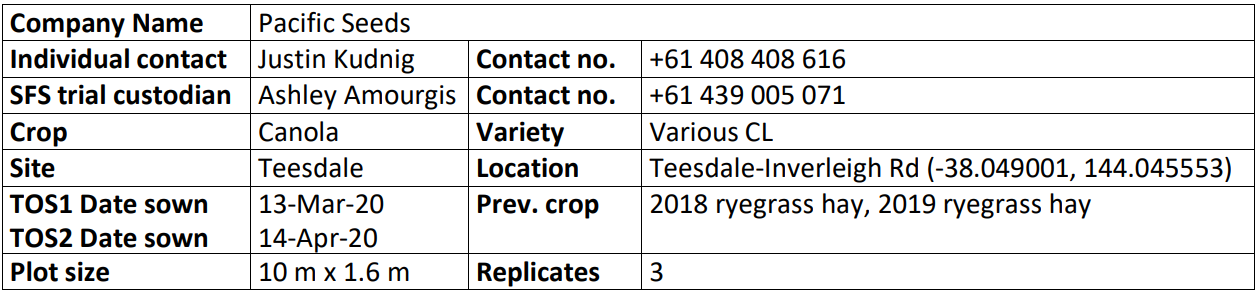
2020 Teesdale-Inverleigh Vic TOS1 and TOS2 Trial
NOTE: Every effort is made to ensure this information is accurate. All users who rely on this information do so at their own risk. © 2021. All information produced by Southern Farming Systemsis copyright and is not to be reproduced in any form or distributed to other persons without written permission.
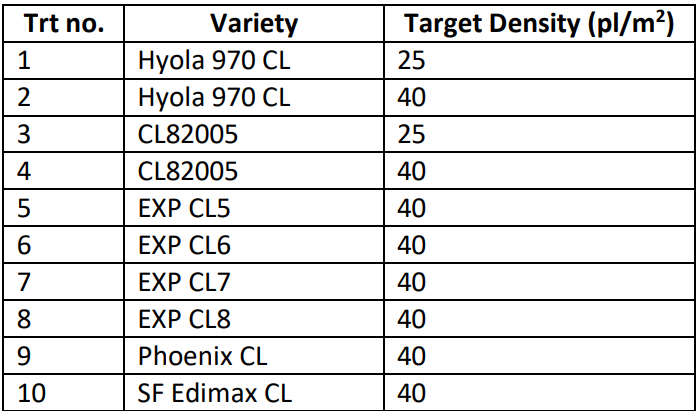
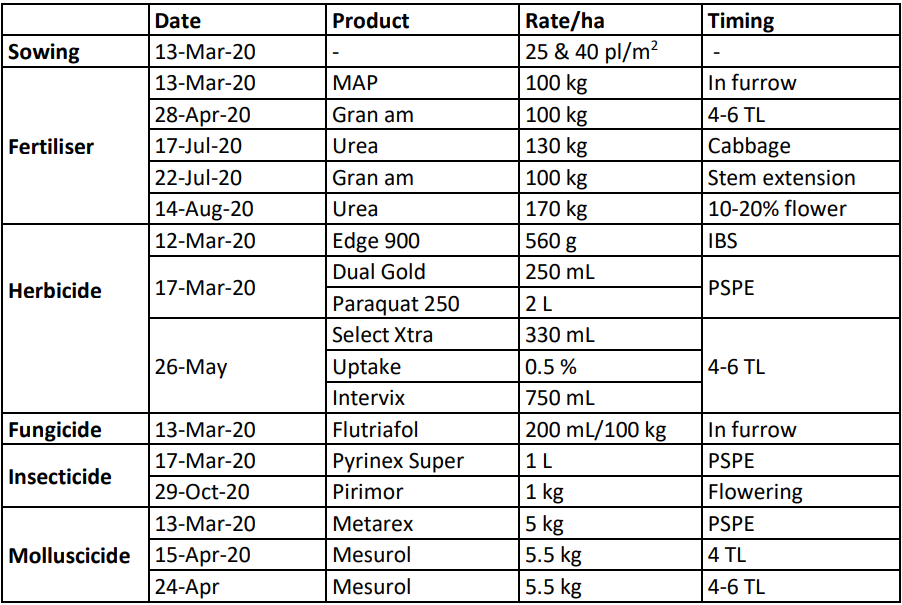
Treatment list for both TOS1 and TOS2 – 2020 Teesdale-Inverleigh Vic
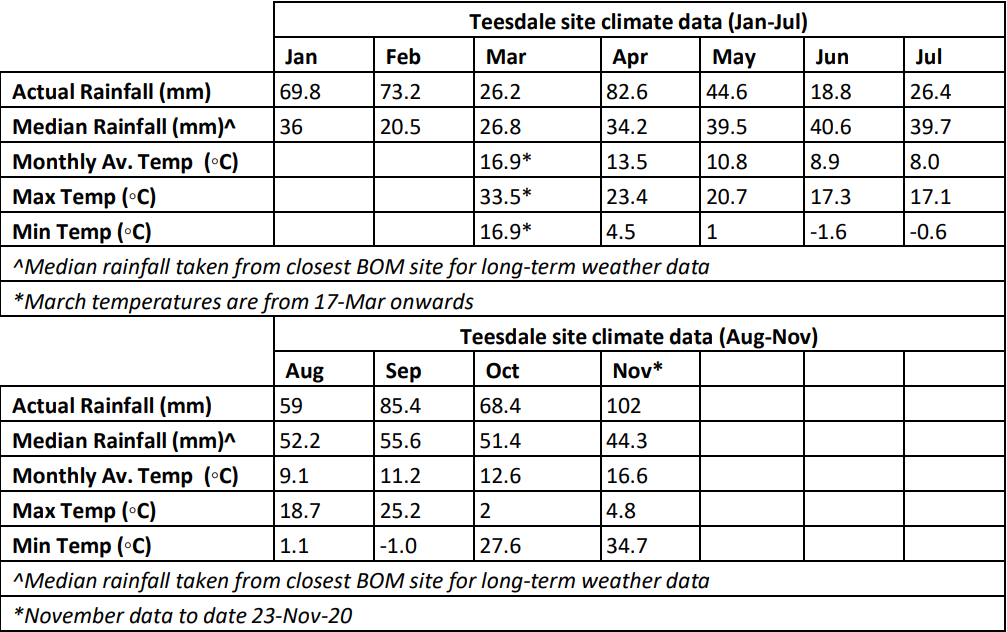
Climate Data for both TOS1 and TOS2 – 2020 Teesdale-Inverleigh Vic
NOTE: Every effort is made to ensure this information is accurate. All users who rely on this information do so at their own risk. © 2021. All information produced by Southern Farming Systemsis copyright and is not to be reproduced in any form or distributed to other persons without written permission.
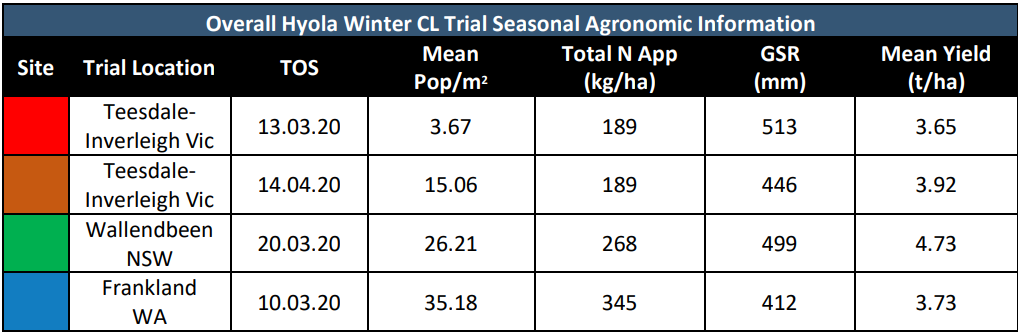
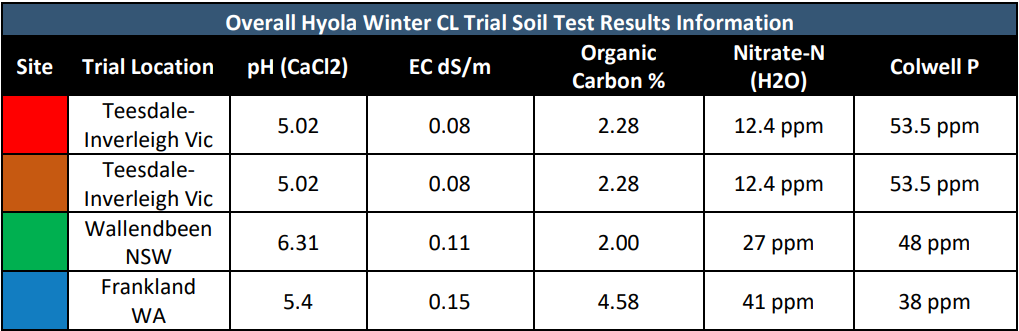
Figure 1. 2020 Teesdale-Inverleigh Vic – TOS1 & 2 Hyola Winter CL Performance Trials – Agronomic Details
Trial Management 2020 TOS1 - 2020 Teesdale-Inverleigh Vic
Trial Management 2020 TOS2 - 2020 Teesdale-Inverleigh Vic
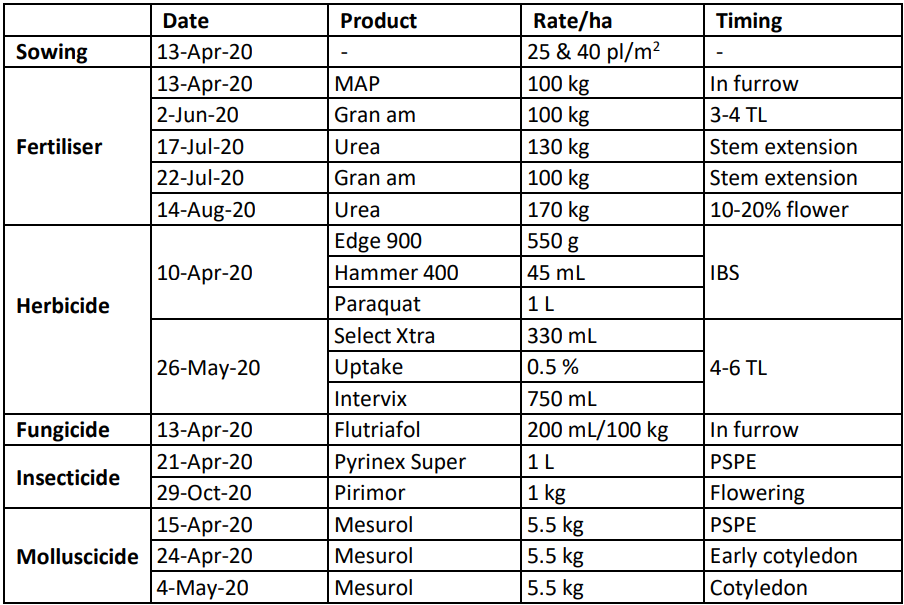
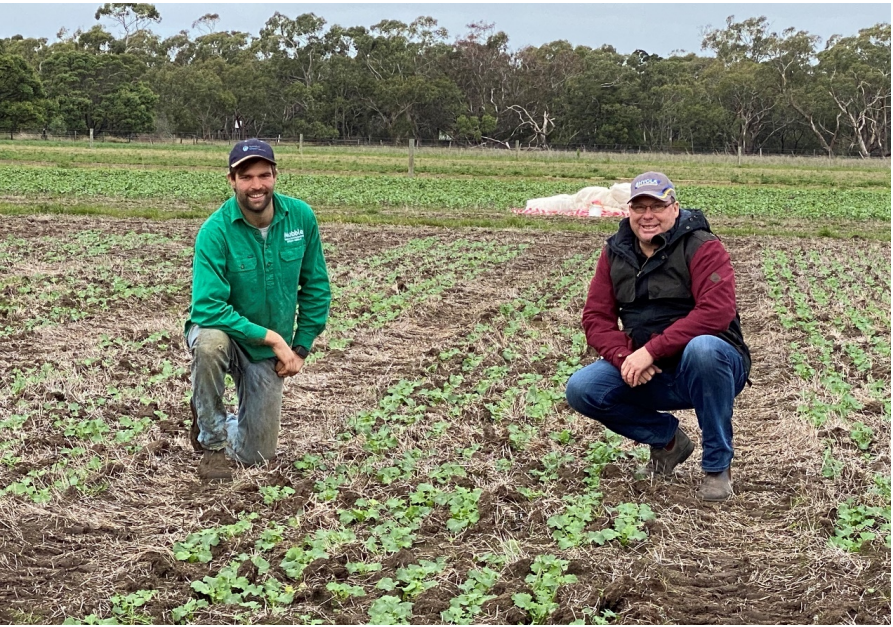
Figure 2. 2020 Teesdale-Inverleigh Vic - Hyola Winter CL Performance Trials – Grower: Lachie Morrison
Figure 3. 2020 Teesdale-Inverleigh Vic – TOS2 Hyola Winter CL Performance Trials – Hyola Feast CL
Results
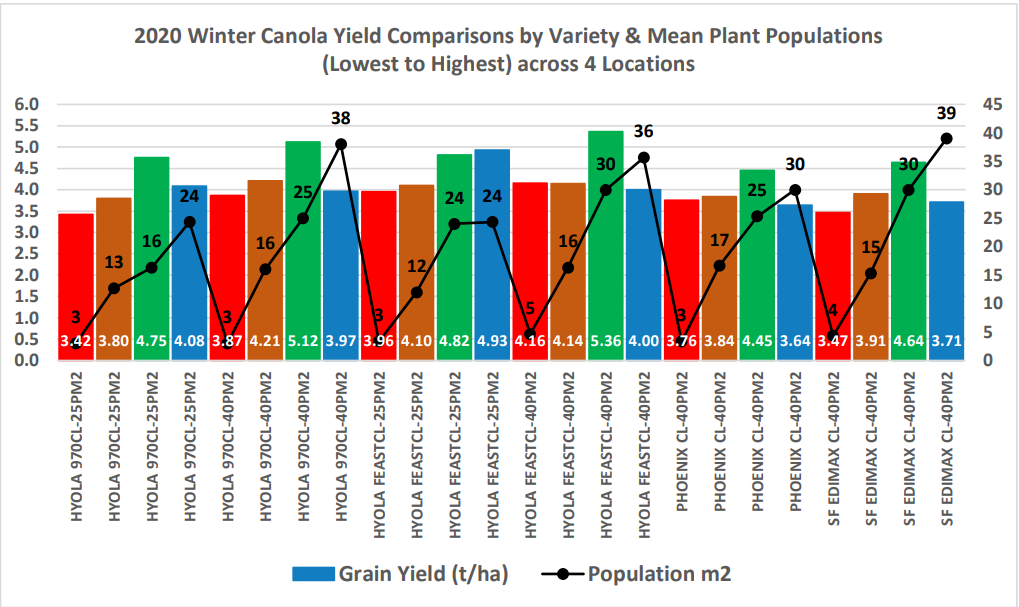
Figure 4. 2020 Winter Canola Yield Comparisons by Variety & Mean Plant Populations (Lowest to Highest) across Locations: Location Colour – Red = Teesdale/Inverleigh TOS1, Brown = Teesdale/Inverleigh TOS2, Green = Wallendbeen NSW, Blue = Frankland WA
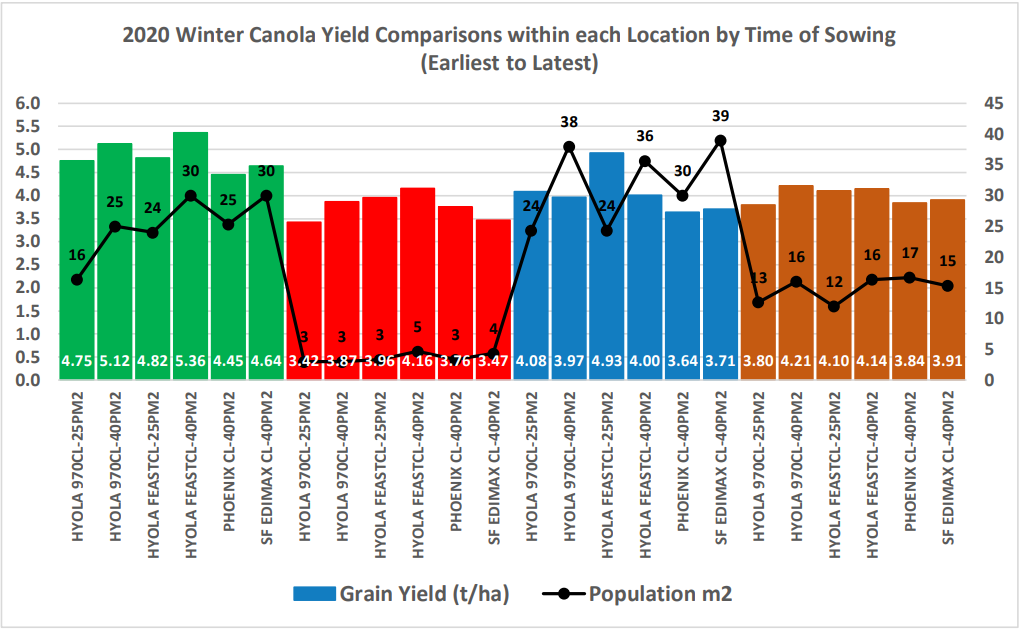
Figure 5. 2020 Winter Canola Yield Comparisons within each Location by Time of Sowing (Earliest to Latest) Location Colour – Green = Wallendbeen NSW, Red = Teesdale/Inverleigh TOS1, Blue = Frankland WA, Brown = Teesdale/Inverleigh TOS2
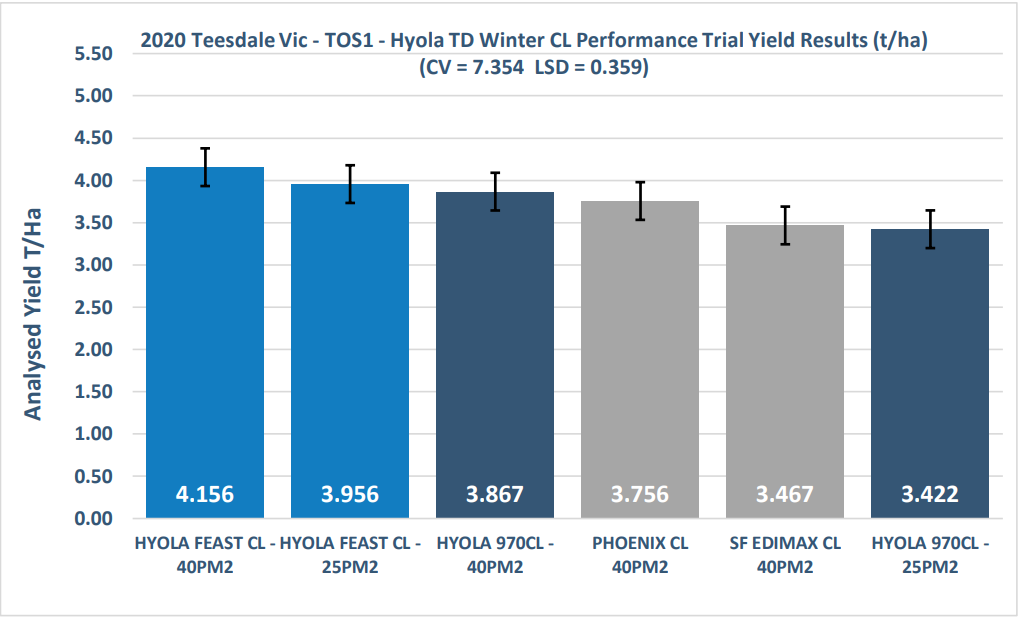
Figure 6. 2020 Teesdale Vic - TOS1 - Hyola TD Winter CL Performance Trial Yield Results (t/ha), (CV = 7.354, LSD = 0.359) across the commercial varieties represented.
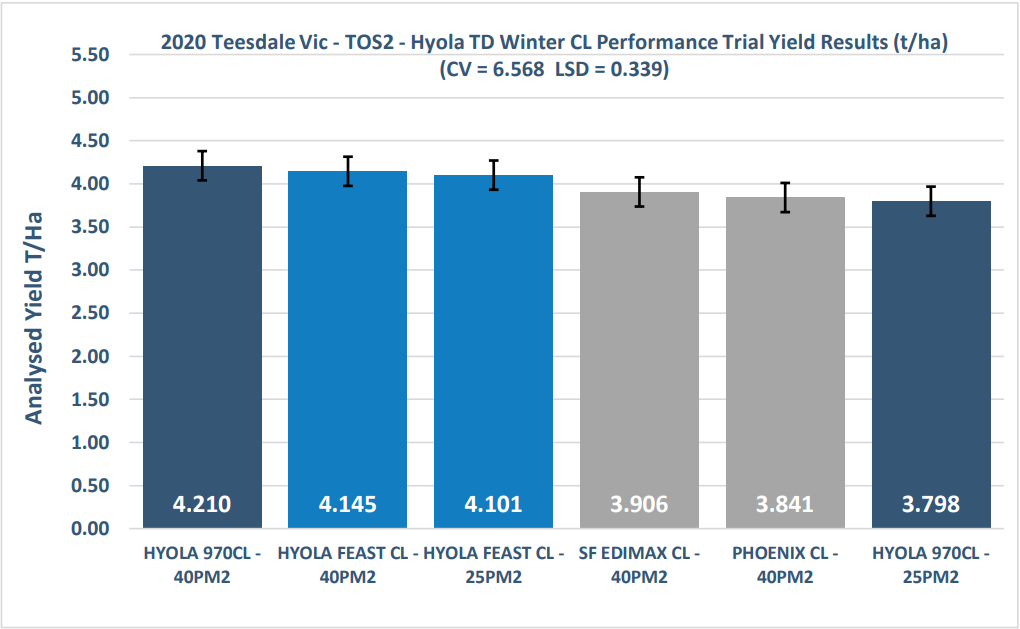
Figure 7. 2020 Teesdale Vic - TOS2 - Hyola TD Winter CL Performance Trial Yield Results (t/ha), (CV = 6.568, LSD = 0.339), across the commercial varieties represented.
Discussion
Plant Establishment: The same set of variety treatments by population targets were conducted across all 4 sites with quite different levels of actual achieved % plant establishment measured due to a range of factors. The first trial sown at Inverleigh-Teesdale effectively became a site specific TOS1, due to the very low establishment achieved (mean 10% across treatments) and thus TOS2 was sown 1 month later which managed to achieve a mean of 41% across treatment target populations. The other 2 trials included in this research located at Wallendbeen NSW and Frankland WA showed considerably higher measured mean % plant establishment across treatments with 71% and 95% respectively. This was due to different soil types, moisture profile and better establishment conditions.
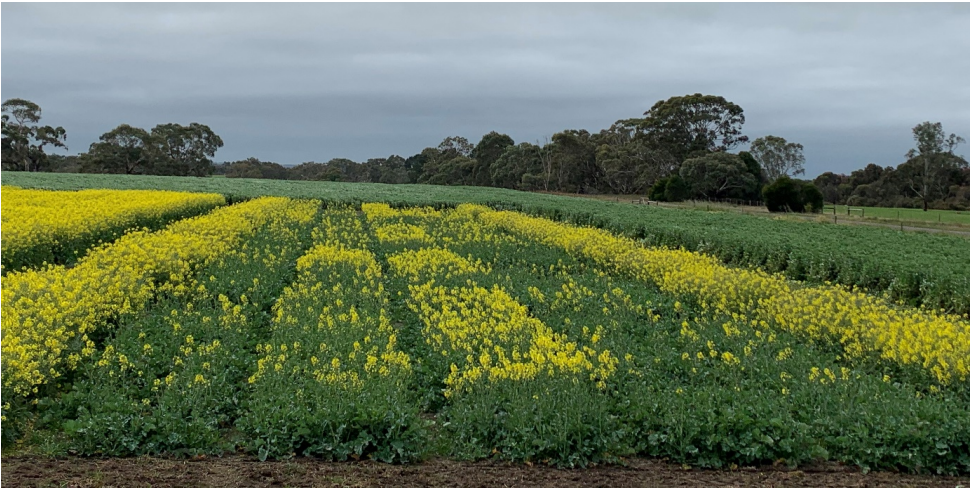
Figure 8. 2020 Teesdale-Inverleigh Vic – TOS 2 Hyola Winter CL Performance Trials – Early Flowering Stages
Grain Yields: Numerous trends relating to grain yield were identified across the 4 trial sites despite the differences in TOS, rainfall and total N applied and very importantly the implications of the actual % plants established against the target population. Within each of the 4 sites when comparing the 4 commercial lines, Hyola Feast CL and Hyola 970CL showed the highest and most consistent yields across environments with some being significant responses compared to other variety treatments.
When comparing Hyola 970CL and Hyola Feast CL at the 25 p/m2 vs 40p/m2 population targets, the higher population target often provided higher yields, especially in the sites with the highest site mean yields, however this was not always a significant response. At the Teesdale-Inverleigh TOS1 site where the populations were very low (<5 p/m2), Hyola Feast showed higher early genetic plant growth biomass than all other hybrids which enabled the 25 p/m2 to yield competitively against the 40 p/m2 treatment (albeit a few plants/m2 difference) and higher than all other varieties under evaluation. All varieties responded to the low plant populations by developing extensive basal multi-stem branching phenology.
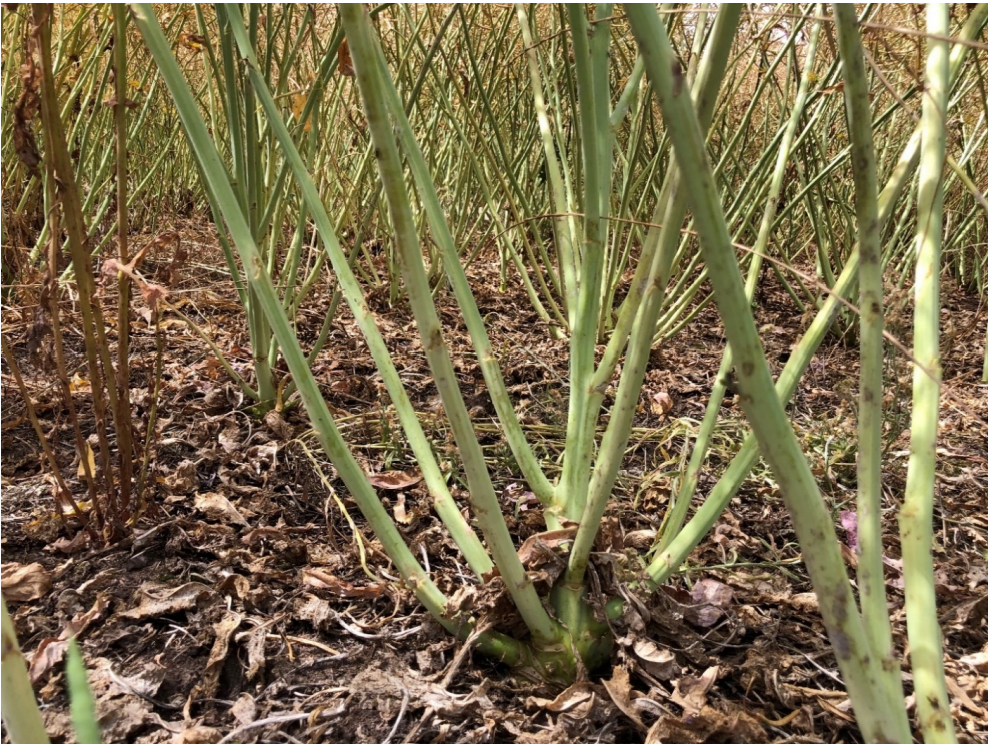
Figure 9. 2020 Teesdale-Inverleigh Vic – TOS 1 Hyola Winter CL Performance Trials – Basal Multi-stem branching
Despite the considerably higher actual plant population % (41%) vs target at the Teesdale-Inverleigh TOS2 trial compared to the TOS1 (10%), the combination of the extra 4 weeks later with sowing date and perhaps the total N applied appears to have limited both the early biomass growth somewhat and the potential greater upside expected in grain yield.
With the Wallendbeen NSW trial site, yields were maximised for the higher GSR (mm) received, coupled with the earlier TOS and the higher total N applied. Another important point to note is that these yields were achieved with a mean of 71% actual of plant population targets which was (26 p/m2). This matches well with previous Winter trial results conducted by Pacific Seeds over the past 3 years, showing that early February to Late March tend to maximise DM production, grain yields and oil contents of winter canola graze n grain types and that sowing into April/May can sometimes limit the maximum potential of both grazing DM and grain yield.
With the Frankland WA trial site, based on GSR (mm), high % plant establishment achieved, and total N applied, final grain yields were not as high as expected compared to other trials. This was due to an underlying nutritional issue that is still being investigated. This condition led to lower plant population treatments (25p/m2) of Hyola Feast CL and Hyola 970CL providing higher yields than the (40p/m2) treatments.
Future trials in Western Australia will focus on new winter types with lower vernalisation requirements, so that more growers may get the opportunity to go these graze n grain types in targeted MRZ growing regions and further explore the enhanced dual-purpose Graze n Grain value over and above traditional Spring canola grain production types.
It is important to note, that no specific recommendations or outcomes have been made regarding N rates and requirements for reaching yields between 3t/ha to 5t/ha, as this was not a nutrition study and we did not evaluate factors such as (NUE). NUE is a complex trait which includes N uptake, N assimilation, and storage and remobilization of assimilates. Each site would have had variation in the amount of N loss via ammonia volatilisation from urea or the alternate N source applied, which can also be dependent on soil moisture at spreading as well as wind or rain events and temperatures after spreading.
Conclusion
Over several years of trials, established Winter hybrid canola populations of 25 plants per m2 or less can provide grain yields equivalent to or higher than 40 plants per m2 depending on time of sowing and seasonal conditions.
Plant populations of Winter canola as low as 4 to 5 plants/m2 can still yield between 3t/ha to 4t/ha with early time of sowing, adequate Nitrogen supplied during the season on top of existing soil N availability and GSR values being between 400 to 500mm.
Extra attention by growers and advisors needs to be considered with weed control, managing herbicide resistance strategies and effective harvest operations for the now basal branching plant phenology of the crop architecture.
Industry research by CSIRO, Departments of Ag, GRDC funded groups and by Pacific Seeds has demonstrated that TOS related phenology responses and nitrogen management has a significant influence on early biomass development, DM production, grazing recovery times and potential grain yield of the winter graze n grain types.
The two highest yielding Winter graze n Grain hybrids across all trials were Hyola Feast CL and Hyola 970CL demonstrating the most consistent yield performance across Australian environments.
Hyola Feast CL is showing a lower vernalisation requirement and an earlier flowering and maturity response across environments which will enable more growers across a wider area of canola growing regions to capture the benefits of winter canola types.
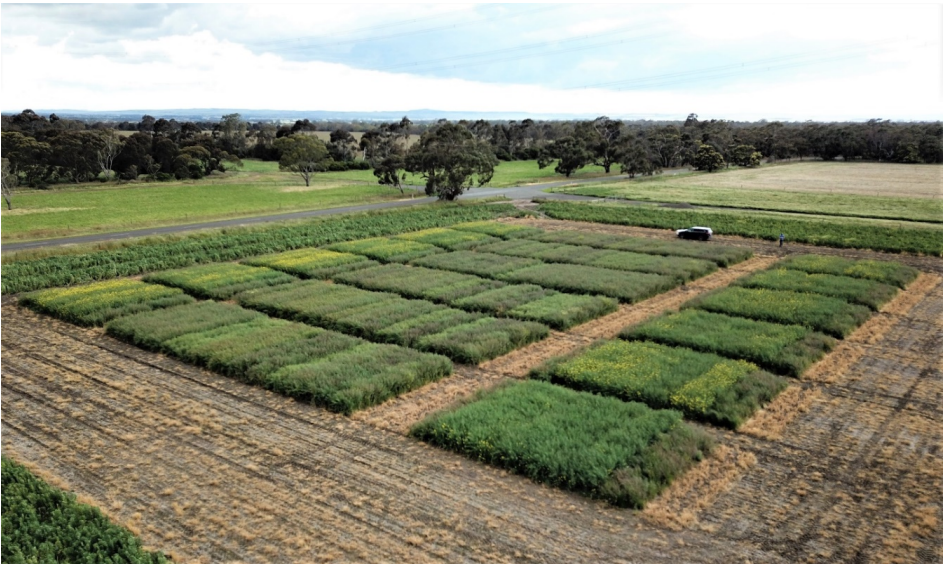
Figure 10. 2020 Teesdale-Inverleigh Vic Trialling site managed by the SFS Team – 3 replicated research trials
Acknowledgments
Thanks to SFS personnel for trial management and operations. Special thanks to Dr David Tabah from Pacific Seeds
for the trial designs and assistance with ASReml analysis.
References
Brill R, (2018) Canola - linking variety choice to time of sowing, to drive profitability of early sown canola
https://grdc.com.au/news-and-media/newsletters/paddock-practices/paddock-practices-canola-linking-varietychoice-to-time-of-sowing,-to-drive-profitability-of-early-sown-canola
Fisher R, Damian Jones, Irrigated Cropping Council, (2018) Grazing canola – agronomic and feed considerations
https://grdc.com.au/resources-and-publications/grdc-update-papers/tab-content/grdc-updatepapers/2016/07/winter-canola-for-grazing-and-grain-production
Paridaen A Premier Ag Consultancy Group Pty Ltd, Susie Sprague, John Kirkegaard and Julianne Lilley CSIRO
Agriculture, Canberra, (2016) Winter Canola for grazing and grain production
https://grdc.com.au/resources-and-publications/grdc-update-papers/tab-content/grdc-updatepapers/2016/07/winter-canola-for-grazing-and-grain-production
Paridaen A and John A. Kirkegaard B C, (2014) Forage canola (Brassica napus): spring-sown winter canola for biennial
dual-purpose use in the high-rainfall zone of southern Australia, https://www.publish.csiro.au/cp/cp14119
Riffkin P A D , Trent Potter B and Gavin Kearney C, (2012) Yield performance of late-maturing winter canola (Brassica
napus L.) types in the High Rainfall Zone of southern Australia https://www.publish.csiro.au/cp/cp10410