
Download The


Pacific Seeds developed the world’s first hybrid canola in 1988. Since then, it has been working with Australia’s and the world’s most experienced canola breeders to consistently deliver the highest canola yields, oils and blackleg resistance; protecting your profitability across diverse seasonal conditions.
AGRONOMIC BENEFITS OF HYOLA 970CL WINTER HYBRID
- Massive leaf and root biomass
- High quality feed in Spring/Summer
- High quality feed in Autumn
- Excellent blackleg resistance
- Excellent grain yield after grazing
- Multiple diversified income streams
- Cropping and grazing flexibility
- Increased rotational sustainability
- Autumn, Winter or Spring sowing
- Pasture spelling in winter
- Diversified grass weed control
- Multiple disease breaks
- Drought protection strategy
- Integrated grazing management tool
- Increased protection against slugs
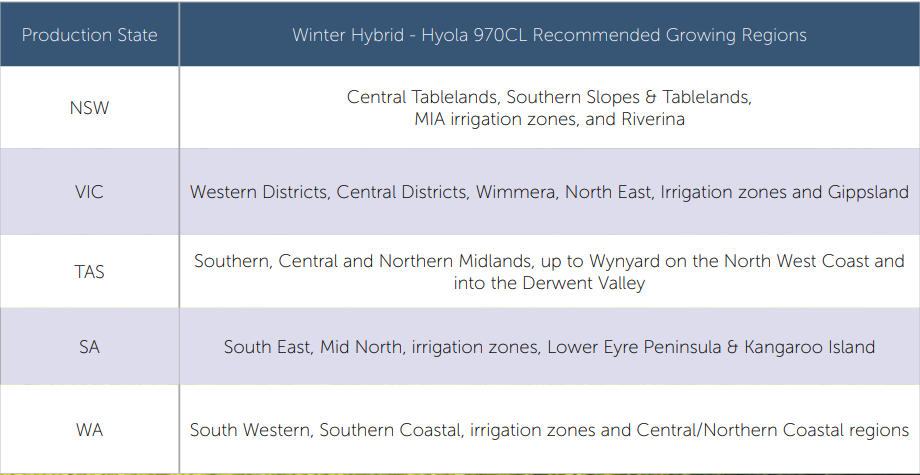
RECOMMENDED GROWING REGIONS
AGRONOMIC MANAGEMENT OF WINTER HYBRIDS
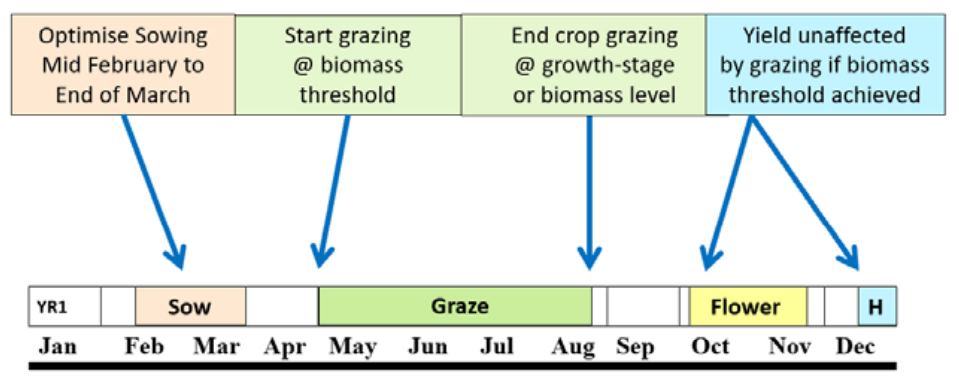
EARLY SOWING MAXIMISES PROFIT FROM WINTER HYBRIDS
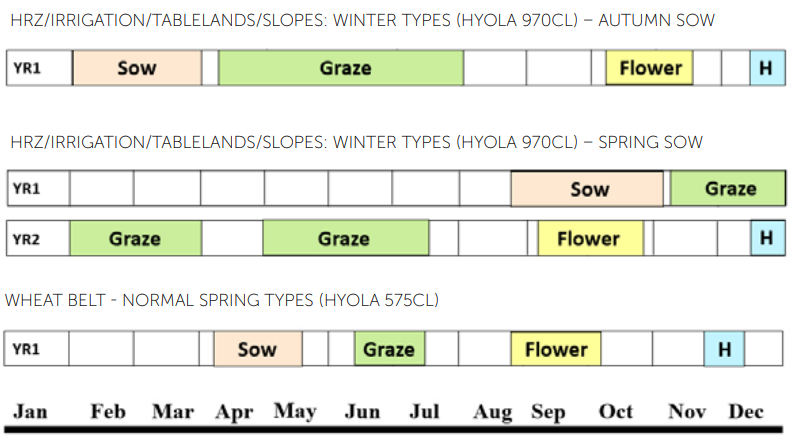
Source: 2017 CSIRO Grazing Canola Crops Presentation
UNDERSTANDING AGRONOMIC GROWTH OF WINTER HYBRIDS
Winter hybrids will always have an overwintering phase in their growth cycle where the leaves turn purple/ blue and react to the impending winter which normally would prepare them for snow or extreme cold conditions.
Overwintering depends on numbers of growingdegree-days (GDD) in the autumn vegetative period. Research has shown that in the autumn period plants need 416 GDD for developing a strong root system and to prepare for wintering.
Leaf area and dry weight correlated with growing degree day (GDD) and the number of days after germination. The 5th leaf reached its maximum area after 552oC GDD were accumulated.
Canola needs about 1,500 GDD to reach maturity. GDD's are calculated by averaging daily maximum and daily minimum temperatures for each day, and subtracting the assumed minimum temperature (in this case Base 0) required for growth to proceed. A day with a high of 20°C and a low of 10°C would contribute 15 GDD's on a Base 0 scale.
GROWING DEGREE DAYS (GDDS) BASE 0°C REQUIRED TO REACH VARIOUS GROWTH STAGES FOR NAPUS CANOLA
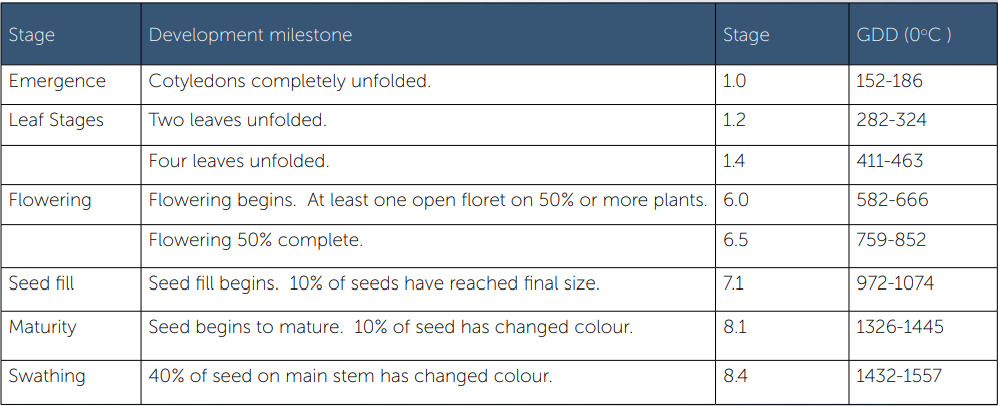
Source: Stu Brandt, Scott, SK 1993-97 and Perry Miller, Swift Current, SK 1995-98
Planting date has a significant influence on leaf area especially under different seasonal GDD. The earliest established stands grew well and produced large plants with a larger leaf area index or biomass. Plants established early made steady progress in leaf area production in spite of replacing older leaves when they dropped off. Plants established later just maintained their weight and leaf area.
The effect of plant density on leaf area of winter hybrid canola types is generally negligible and becomes evident only when plants accumulated more than 400oC GDD. This may be caused by excess competition between plants.
At the end of vegetative growth, the larger leaf area or biomass per plant, as well as greater dry matter, is detected at the lowest plant density. The differences in plant leaf area between medium and high densities is normally negligible, even at the end of vegetative growth.
The over-wintering stage in observed with purpling and bluish leaves throughout the crop and the appearance that the crop is stressed and malnourished (pictured below).
Pre-plant N application above normal requirements generally has a small effect on plant leaf area. A more noticeable effect was detected only when plants accumulated more than 300oC GDD. Late-sown plants did not exhibit any response to autumn-applied N in leaf area or dry matter content. The main factor limiting the growth of late sown-plants was low air temperature.
GDD and the number of days after emergence are important factors. During the initial 35-40 days after emergence, the weights of plants from the earlier seeding dates increase slowly. At 385oC GDD, average dry weight was 0.63g per plant. Plant dry weight started to increase rapidly at 400oC GDD and continued until the end of vegetative growth, especially at 500oC GDD. Similar tendencies for variation in plant weight are normally observed for the later sowing dates, but plant dry weight was lower when the sowing date was delayed.
When mean daily air temperature (MDT) was above 9oC, the weight of winter hybrid type plants increased slowly. The most substantial plant weight increase during the cool period is seen most clearly in winter hybrid canola from earlier planting dates. This growth increase most likely is related to the intensive preparation of plants for the coming winter.
Only when the winter hybrid plants have accumulated more than 300oC GDD is a tendency toward weight increase in N-fertilized plants observed. The response to extra pre-plant N fertilization over normal requirements occurs only for the earliest sown crops.
Significant correlations between the number of plants per unit area and per plant dry matter can be observed normally for earlier sowing dates. Stand population density has the largest effect on the earlier sown winter hybrids. Increasing stand density had the opposite effect on total dry matter content per unit area. An increase in stand density resulted in an increase in dry matter content. As plant numbers increase by one plant per area unit, the dry matter content at the end of vegetative growth increases by as much as 4.13g, therefore, showing that an increase in stand density reduces single plant weight, but increased total dry matter content. Different winter hybrids have different levels of winter hardiness. The winter hardiness in the plants is mainly determined by the concentration of different macro elements, like sugar, in the cells of the plants. Every time the weather warms up after a cold snap, the concentration of these macro elements in the cells goes down and the winter hardiness of the plants decreases.
So the highest winter hardiness of plants is at the beginning of the winter or the first cold period. When we experience more of these cold - warm circles the plants decrease their potential winter hardiness. This means for our current situation, that when we will see a few more ‘warming ups’ (above freezing) followed by freezing periods in the next few weeks until the spring temperature is achieved, then winter damage can be expected.
When spring conditions arrive and vernalisation requirements are met, then that have winter hybrid at 6 – 10 leaves, with an evenly spread population of 20 to 30 plants/ m2 can achieve yields between 2.0t to 6.25t/ ha, as long as spring conditions are not too hot with significant frost events.
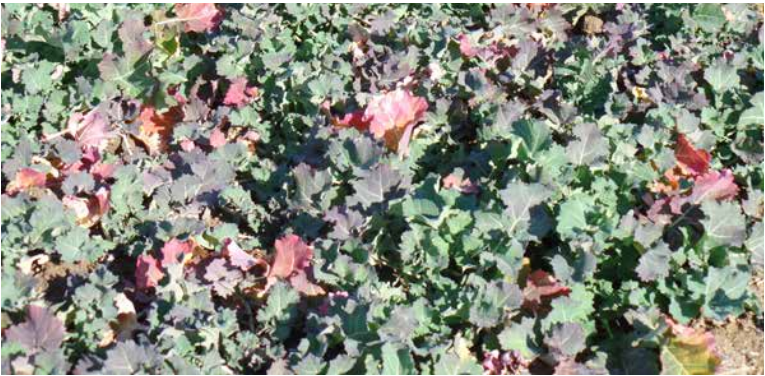
Overwintering of winter hybrid canola is a normal part of the development process.
WINTER HYBRID LIVESTOCK & GRAZING MANAGEMENT
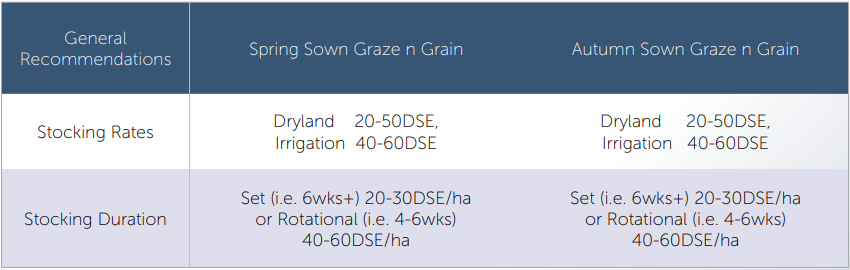
What are Dry Sheep Equivalents?
The Dry Sheep Equivalent (DSE) is a standard unit frequently used to compare the feed requirements of different classes of stock or to assess the carrying capacity and potential productivity of a given farm or area of grazing land. Relative profitability of different livestock enterprises may also be expressed as $/DSE. Sometimes the terms "Stock Equivalent" or "Livestock Equivalent" may be used in the same context as DSE.
The DSE and other stock equivalent systems are only approximations. The feed requirements of livestock vary with their liveweight, level of production, physiological state, land topography and climatic conditions. DSEs are based on the energy requirements of animals and do not account for differences in the protein or mineral requirements of different animals. The DSE is an estimate of average feed requirements, ignoring variations between animals of the same class due to genetic differences or management practices.
Daily feed requirements
The amount of feed an animal requires each day can be determined for most circumstances by estimating the amount of energy it requires. DSEs vary with the size of the animals, whether or not they are pregnant or lactating, and the rate at which they gain weight. The other major use of these figures is in determining the amount of feed required by a flock or herd over the whole year, or at critical times of the year. Such calculations allow comparisons to be made of the requirements of alternative livestock enterprises.
Feed management considerations
The appropriate figures for an individual farm will depend very much on aspects of the farm environment and the management strategies employed. In calculating the requirements of a sheep flock with a higher lambing percentage than the average, allowance would need to be made for the higher costs of pregnancy and lactation. Similarly, cattle herds of larger than average mature size or greater milk production will have greater feed requirements. Buying and selling strategies will also influence DSE values.
Management strategies must be taken into account when deciding on the appropriate figures to use in comparing differing classes of stock or livestock enterprises. Specifically in relation to sheep, the relative demands of wethers and breeding ewes are very dependent on both the time of lambing and the level of stocking. Other considerations with spring-lambing systems include the greater number of twin lambs, particularly with crossbreds or highly prolific breeds, and the greater feed consumption and faster growth rates of lambs compared with autumn lambing.
Furthermore, in the event of an early end to the growing season, lambs associated with the ewe enterprise can be very demanding on available pasture or supplementary feed. The production and running costs of ewes and wethers vary considerably, so that economic factors affect the relative optimal stocking rates of ewes and wethers. Ewes, even at low stocking rates, can require a considerable amount of supplementary feed compared with wethers at much higher stocking rates.
Carrying capacity
The carrying capacity of a farm is commonly determined by expressing the number of stock carried during a period of feed shortage in terms of their DSEs.
GRAZING MANAGEMENT RESEARCH OUTCOMES
Dual purpose Graze n Grain Winter Hybrid canola applications are suggested in all current high rainfall canola growing areas across eastern and western Australia. In all cases, dual-purpose use would rely on early sowing opportunities, careful varietal selection to ensure that crop development, both before and after grazing remains within an acceptable physiological window, and careful grazing management to balance any trade-offs between the value of the forage and that of the seed.
CSIRO’s Dr John Kirkegaard states “We have demonstrated that from April sowings, canola can produce 2.5 to 4.0t/ha of high quality forage for grazing in winter, which is readily eaten by sheep, and that good liveweight gain can be achieved (210g to 300g/ day for Merino lambs). 600-800 DSE grazing days/ha were achieved in most cases. We have been able to achieve up to 2000 grazing days with early sown winter types, and that is their great advantage over spring types sown in their normal window.”
“We observed no animal health issues associated with grazing canola and believe potential problems are manageable by observing current recommendations for grazing fodder brassicas.
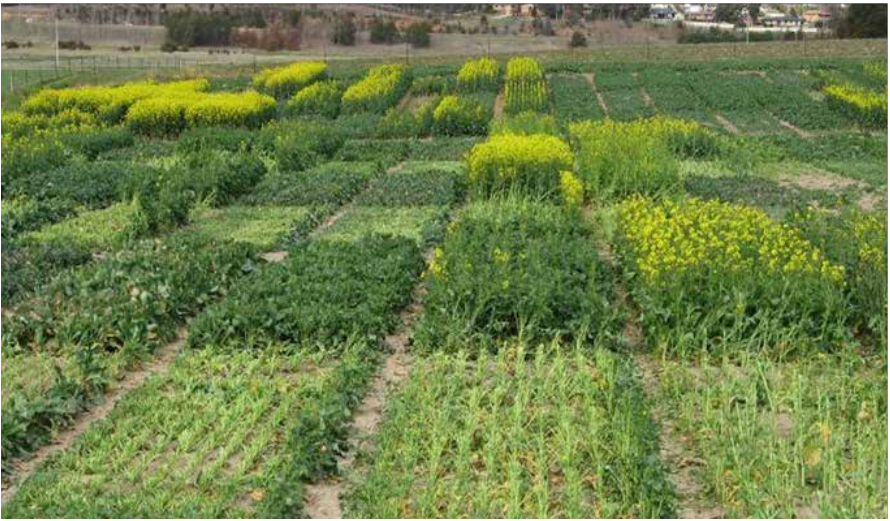
Source: Graze N Grain yield and agronomy evaluation trials conducted by CSIRO in NSW/ACT.
“The canola can recover well from heavy grazing, although flowering delays associated with grazing ranged from 0 to 4 days when grazed before the buds were visible and elongating, to 28 days if the crop was already flowering when grazed.”
“Significant delays in flowering caused yield reductions particularly if the spring conditions were unfavourable, although no yield reductions were observed when cool and wet spring conditions allowed compensatory growth.”
“In the cooler, higher rainfall areas, there appears to be significant scope to capture value from grazing during the vegetative period without significant impacts on yield. The trade-off between continued grazing at the possible expense of seed yield is one which could be managed by individual enterprises once clear guidelines to predict these trade-offs are established. Hay cutting and silage are other viable options providing further flexibility for canola within mixed farming systems.”
Phenology, sowing dates and flowering
Winter or long-season spring varieties can be sown early (late March/April), grazed in winter (mid-August) and recover from grazing to produce high yield (4t/ha) and good oil content (47%). Early sowing (prior to earlyApril) suits winter types which require a cold period (vernalisation) to initiate flowering and so do not bolt too early. Potter 2011, found that maximum pod length is produced before grains begin to fill and Winter types reached maximum pod length and seeds filled quicker in days than the Spring types as development occurred under warmer conditions.
Biomass (forage) production and grazing timings
Winter or long-season spring varieties can be sown early (late March/April), grazed in winter (mid-August) and recover from grazing to produce high yield (4t/ ha) and good oil content (47%). Early sowing (prior to early-April) suits winter types which require a cold period (vernalisation) to initiate flowering and so do not bolt too early. Later grazing (September) increased forage production but reduced grain yield, although the value of the additional forage can offset yield reduction in some cases.
Kirkegaard 2008 et al, states that hybrid varieties produced up to 50% more early biomass (6-8 leaf stage when grazing would likely commence) than conventional varieties and triazine tolerant varieties 50% less. Yield loss associated with defoliation was minimal if the terminal buds were not removed in the defoliation process (i.e. elongated < 15 cm) but significant loss (up to 60%) could occur if plants were defoliated at later stages depending on seasonal conditions. Hybrid canola improves the profitability in the high rainfall zone in the average and above-average rainfall years (Zjang 2012).
High dry matter, in particular high dry matter at flowering, is the most important factor to high yield. Therefore, agronomic management needs to target early dry matter growth. Manipulation of source supply by defoliation, shading and irrigation indicates that seed yield of canola is source-limited, not sink size limited.
Winter types sown in March have produced similar early biomass as conventional spring types (2.5 – 3.5t/ha of biomass in 8 weeks) and provided 1t/ha of grazed forage in early May. Winter and long-season spring canola varieties sown in mid-April can provide 2 to 4t/ha of winter forage for grazing by mid-August.
Animals readily eat canola at growth stages ranging from early vegetative to flowering/early pod stage and showed no preference for a commercial fodder hybrid when offered a choice between the hybrid and canola. Canola forage (in winter) was of high quality - around 20% protein and 80% digestible
Under heavy grazing in winter the animals removed 60% of the available biomass. No animal health issues have generally been observed from grazing periods of 2 days up to 3 weeks, but established guidelines for grazing brassicas should be observed.
Impact of grazing on growth and development
Grazing delayed flowering and reduced plant height depending on the intensity of grazing and the plant stage at the time of grazing. Research conducted in Canberra, under intensive mid-August grazing (i.e. 2/3 of available biomass removed), showed the delays in flowering and impacts on plant height according to plant stage when grazed were as follows; Plant stage when grazed Delay in flowering Height reduction (cm) - vegetative stage before buds are visible 0 to 3 days = None, plants with buds visible but not elongated = 4 to 10 days, buds elongated (20 - 30 cm) no flowers = 7 - 15 days and 10 to 20 first flowers opening 26 to 40 days.
RECOMMENDED GRAZING CANOLA STAGES
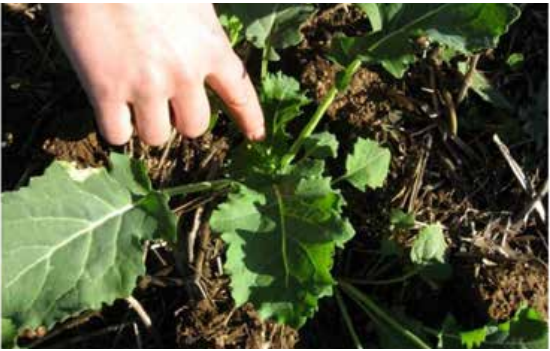
START GRAZING STAGE
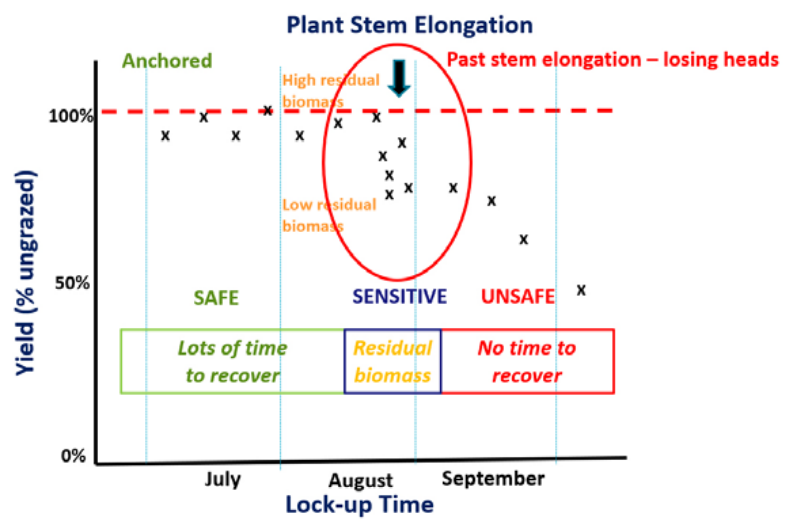
Use the twist and pull test which involves determining that the plants are well anchored, with atleast 1.5t/ ha biomass (usually achieved by 6 to 8 leaf stage). Grazing intervals and stocking rates vary between paddocks and plant population along with crop growth stage become critical components of the grazing decision making process
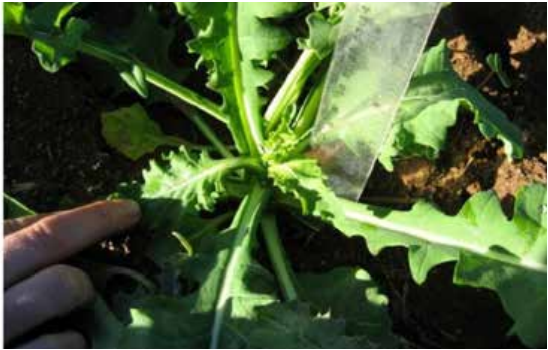
MONITOR BUD ELONGATION
Monitor for bud elongation, because industry winter canola grazing research has shown that grazing the plants once buds elongate, delays flowering and pod development which can reduce final grain yield potential. Grazing the canola plants past 10cm of effective elongation can delay flowering for 3 weeks or greater.
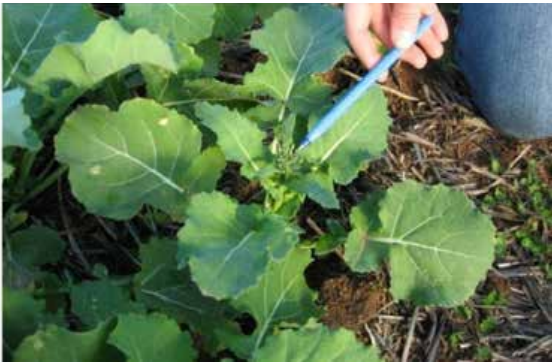
PAST OPTIMUM GRAZING STAGE
Once the bud has elongated to high and the plants are past the optimum grazing stage then damage can be done to the plants normal development and affects the flowering and regrowth stages significantly. This leads to a substantial drop in biomass recover, later flowering and the potential grain harvested.
IMPACTS OF GRAZING ON YIELD AND NITROGEN MANAGEMENT
The effect of grazing on yield depended on both the magnitude of the growth and development changes (above) and on seasonal conditions. The delays in flowering and the need for vegetative re-growth can reduce leaf area development, shorten the flowering and pod-filling period and increase the risk of heat and water stress during pod-fill. These can all contribute to yield and oil reduction, although the impact depends on seasonal conditions. Yield penalties are reduced in cool, wet spring conditions as crops can compensate for later flowering. Yield penalties caused by grazing can be offset by the value of the grazing, hay or silage in some seasons depending on the type of enterprise mix on the farm.
Potter 2011, research showed that grazing does reduce dry matter and grain yield and results in fewer pods and seeds/ m2, smaller grains and an increase in internal blackleg infection. He also found that the higher N rate given gave greater yields from more pods and seeds/m2. Kirkegaard 2009, suggests that top-dressing N after each grazing event with adequate rainfall or irrigation leads to good growth recovery.
Clip-grazing This is a less intensive strategy where fewer sheep are grazed on larger (100 - 200ha) paddocks earlier and for longer periods, on crops which could be sown more or less within the current sowing window for canola. This type of approach would be more suited to crop-focused farmers with the idea of this approach is to minimise the impact of any grazing on canola yield which is a greater profit driver of these largely crop-focused farmers who tend to carry fewer stock.
This would mean trying to avoid delays in flowering and ensuring that flowering ends around mid October. Advantages may also arise from management such as wider rows sown into trash for easier access and less spoilage by sheep. The types of enterprises which may utilise this approach would be lambing or lactating ewes in winter, and finishing lambs or steers in autumn. The feed would be most valuable during the month of July. This approach may be suitable for large areas of traditional canola growing regions in medium-rainfall environments with a somewhat shorter growing season.
Strip grazing Grazing with an electric fence will allow the crop to be utilised more effectively. Losses caused by trampling can be kept to a minimum, and by controlling stock movements all areas of the paddock can be utilised more uniformly. Strip grazing is more successful with beef and dairy cattle than with sheep.
GRAZING LOCK-UP TIME IS KEY
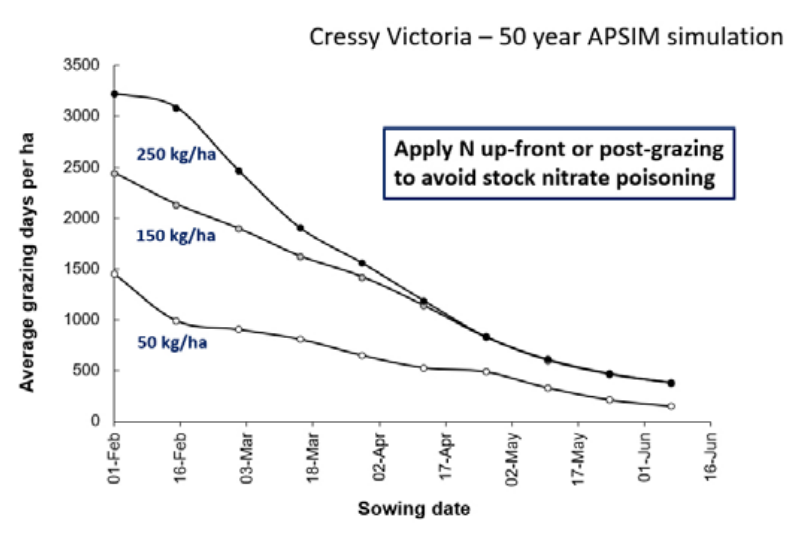
SIMULATIONS - SOWING TIME AND N EFFECTS ON GRAZING
DISEASE AND PEST INCIDENCE
Grazing does not always significantly increase blackleg incidence or severity in the winter canola and winter types generally have high blackleg resistance. Blackleg disease can be absent from the un-grazed crop but stem infection severity of 10 to 50% has been observed in grazed treatments in trials. Early sown crops (March) have shown some early insect damage although grazing in May removes most of the damaged leaf material.
Research has shown Winter Hybrid types to be quite resilient with grazing and independent research trials has shown that they have inherently high levels of blackleg resistance and that being higher resistance to most Spring canola types. Kirkegaard 2009, found blackleg severity was increased by defoliation but this was minimised in varieties with good genetic resistance.
LIVESTOCK FEED TESTING AND GRAZING RECORDS
These results are provided to show a general example of feed test results and a livestock grazing record in order to demonstrate how the winter hybrid graze n grain canola can be tested and utalised in both a sheep and cattle enterprise. Note: Feed test results and livestock records will differ for each and every paddock, situation and grower.
Example NIR analysis feed test results
Dry Matter (%) 15.1
Moisture (%) 84.9
Crude Protein (% of dry matter) 17.2
Acid Detergent Fibre (% of dry matter) 20.1
Neutral Detergent Fibre (% of dry matter) 24.5
Digestibility (DMD) (% of dry matter) 86.8
Digestibility (DOMD) (Calculated) (% of dry matter) 80.3
Est. Metabolisable Energy (Calculated) (MJ/kg DM) 13.3
Comments: Metabolisable Energy has been calculated using the following equation:
ME = (0.203 x DOMD %) - 3.001
EXAMPLE LIVESTOCK GRAZING RECORD
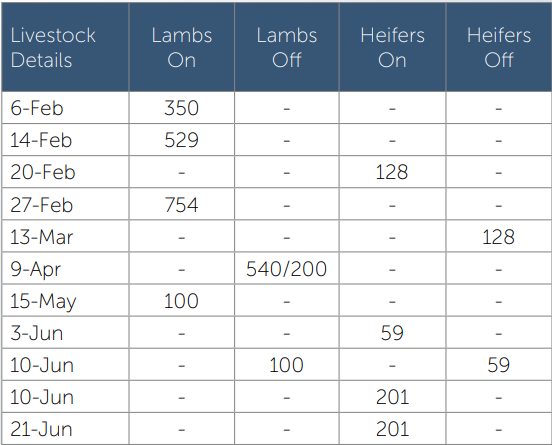
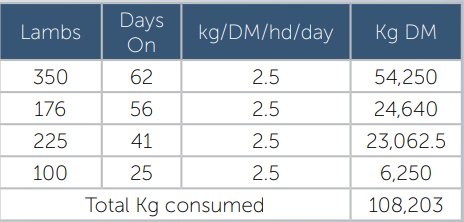
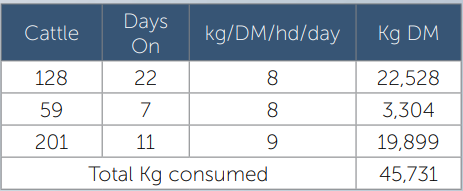
Comments: Total MT/DM consumed = 153.93 on Total area of 36ha with t/DM per Ha = 4.27. 540 lambs - sold 24.8kg = $153, (55kg LW), Av 53 days - 339g/day Estimated live weights: Lambs – 37kg, Heifers – 260kg
ANIMAL HEALTH CONSIDERATIONS
Brassica crops have been associated with some animal health problems. The key to avoiding these problems is to understand how the crop and particularly the variety should be managed. Some brassicas can be grazed earlier than others. Introducing the animal to the crop slowly and monitoring adverse reactions can prevent most animal health problems.
Introduce grazing animals onto a brassica crop slowly, so that the rumen microflora has the chance to adjust to the high quality diet. It will normally take an animal up to a week to become accustomed to the new feed. Restricting grazing to 1.2 hours per day, slowly increasing to unrestricted access over 7 to 10 days will allow stock to become accustomed to their new feed.
Brassicas are highly digestible and generally have lower fibre content, so access to additional roughage such as hay may provide a more balanced diet and improved weight gains. This may also help to ration the brassica crop and improve crop utilisation.
Never give hungry animals the chance to gorge themselves on a lush brassica crop. Stock should always have access to plenty of good, clean water. Unlimited water supplies will ensure the animal’s appetite is not suppressed and their metabolic requirements are met. This is especially important over summer when evaporation rates are higher.
In situations where brassica has been undersown with pasture, it is a good idea to have a smaller paddock or area sown completely to brassica. This smaller paddock is used to accustom stock to grazing brassicas before placing them onto the pasture and brassica paddock. Animals unused to brassica will tend to eat out the young pasture component before consuming the brassica.
Livestock health problems from grazing brassicas are relatively rare and can largely be avoided by good agronomic and grazing management. Careful monitoring of stock performance and behaviour will allow any problems to be identified quickly and rectified if necessary. Do not hesitate to consult your veterinarian for advice should you suspect any animal health problems. Some livestock health problems that are known to occur include the following:
Photosensitisation Grazing crops too early, prior to maturity can cause animals to suffer from photosensitisation. Young animals (especially lambs) are prone to photosensitisation, while animals with dark pigmented skins and wool covering are much more tolerant. The most common sign of photosensitisation occurs on unprotected body parts such as the face and ears. Swelling occurs followed by blistering and scabbing of the ears and face. Hybrid brassicas are less likely to cause photosensitisation. If the condition develops and is detected early, it can be reversed by removing the stock from the brassica crop and placing them in a shady area or in a shed. Following the grazing recommendations relating to varieties and maturity will largely avoid this problem.
Nitrate poisoning
Nitrates accumulate in plant leaves and in very high concentrations may cause livestock death. This problem is largely caused by high soil nitrate levels following prolonged dry conditions being quickly taken up with rapid growth following rainfall or irrigation. Hungry livestock suddenly introduced to nitrate bearing plants are more exposed to nitrate poisoning. Cool, overcast conditions and nitrogenous fertilisers can also increase exposure to high nitrate levels. Introduce stock slowly to the brassica crop and never with an empty rumen to minimise problems.
Goitre (enlarged thyroid)
This is sometimes a problem in young lambs, where pregnant ewes have been grazing leafy brassica crops. Contact your veterinarian for advice on iodine supplements for lambs or supplements for the pregnant ewes
Digestive disturbances
The grazing of brassica crops for protracted periods can sometimes result in rumen stasis (rumen stops moving) and constipation. Affected stock will appear depressed and lack appetite.
Respiratory problems
Grazing brassicas have sometimes been associated with cases of pulmonary oedema (fluid in lungs). Affected animals display respiratory distress.
Blindness
Occasional outbreaks of the condition that involves blindness, aimless wandering and unpredictable hyper-excitability are observed in cattle grazing brassica crops.
Bloat
Bloat is easily prevented by ensuring stock are full before putting them onto a brassica crop.
CLEARFIELD HERBICIDE AND WEED MANAGEMENT
CLEARFIELD® HYBRID CANOLA PRODUCTION
SYSTEM BENEFITS
CLEARFIELD® HYBRID CANOLA PRODUCTION SYSTEM BENEFITS
The Clearfield® Production System offer growers:
• Single pass residual weed control with Intervix herbicide
• Higher yield potential with early weed control
• Significant weed seed reduction with Intervix herbicide
• High Quality Hyola® Hybrids for top performance throughout Australia
• A stewardship program that outlines best management practices for Clearfield crops
INTERVIX® HERBICIDE OFFERS MORE OPTIONS
Intervix Herbicide is the most recent generation of custom designed Clearfield® canola herbicides offering growers a higher level of knockdown power combined with in crop residual activity. Intervix Herbicide is registered for application from the two leaf canola crop stage and provides more robust single application knockdown and residual control of broadleaf and grass weeds.
Intervix offers extended control of many hard to kill weeds with a single pass. Growers can apply Intervix early at the two leaf stage avoiding the costly yield penalties associated with other crop systems. Intervix’s easy one pass application avoids the need to wait around for multiple germinating weeds.
CLEARFIELD® CHEMISTRY WEED CONTROL BENEFITS
• One pass weed control
• Registered for use from the 2 leaf canola stage
• Powerful grass weed control including brome and barley grasses
• Excellent broadleaf weed control including wild radish
• In season residual weed control to manage staggered germinations
• A plant back profile offering flexible cropping options
KEY WEEDS CONTROLLED IN THE CLEARFIELD® PRODUCTION SYSTEM
Control and suppression of a vast range of problem weeds, including:
• Rigid Brome Grass
• Indian hedge mustard
• Muskweed
• Wild radish
• Wild turnip
• Annual ryegrass
• Wild oat
• Dense flower fumitory
• Great brome
• Charlock
• Barley grass
• Silver grass *
• Sub clover
• Marshmallow
• Volunteer Barley
• Bedstraw spp. *
• Doublegee
CLEARFIELD HERBICIDE MANAGEMENT
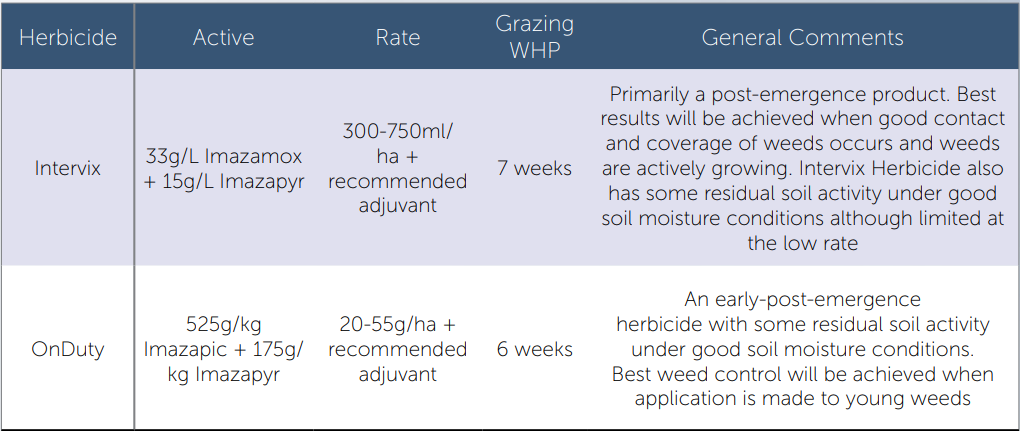
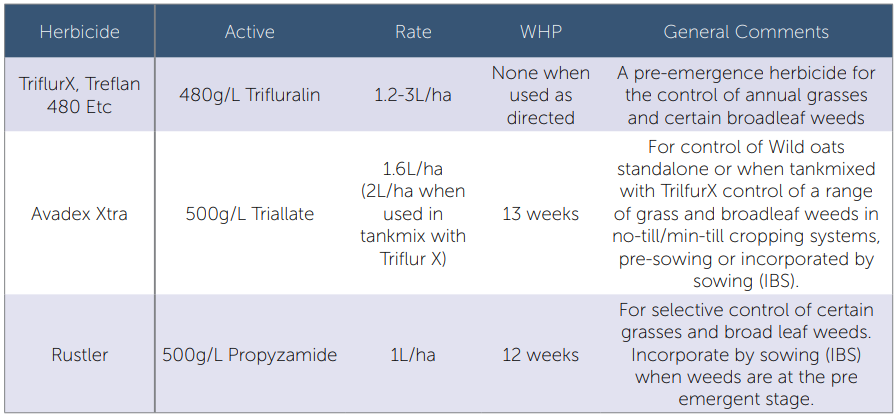
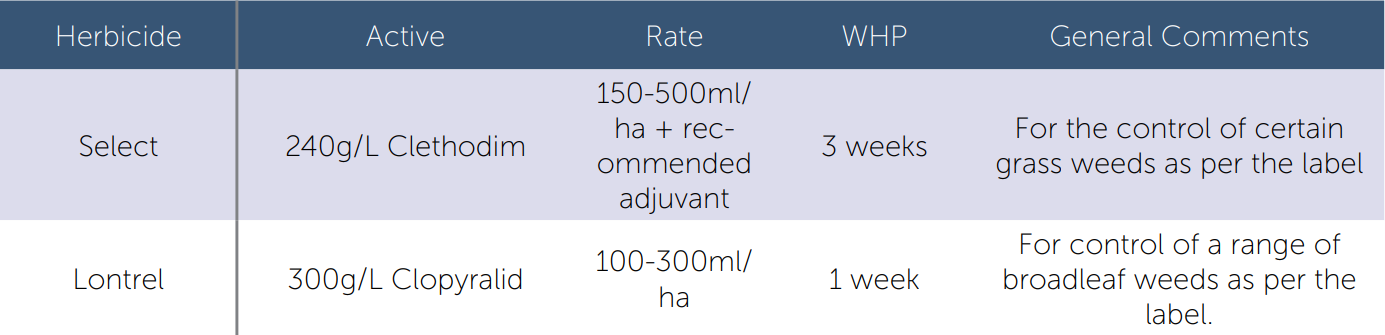
Source: BASF Intervix Product Label 2015
For full details please visit the website: http://www.basf.com.au
SEED TREATMENT AND WITHHOLDING PERIODS
Hyola® 970CL is treated with Cruiser® Opti Insecticide and Maxim XL® Fungicide to assist with maximising protection against some soil dwelling and sucking insects and early seedling diseases. In the future new chemistries may be applied to provide additional enhanced protection technology.


Cruiser® Opti WITHHOLDING PERIODS
Canola: Harvest: NOT REQUIRED WHEN USED AS DIRECTED
Grazing: DO NOT GRAZE OR CUT FOR STOCK FOOD FOR 6 WEEKS AFTER PLANTING
Maxim® XL WITHHOLDING PERIODS
Harvest: All Crops: NOT REQUIRED WHEN USED AS DIRECTED
Grazing: Canola: DO NOT GRAZE OR CUT FOR STOCK FOOD FOR 6 WEEKS AFTER SOWING
TREATED SEED
REFERENCES
1997 – Agriculture Notes – Dept of Agriculture Victoria - Colin McLaren, Attwood September, 1997 AG0590
ISSN 1329-8062
2008 - Identifying canola varieties for dual-purpose use - John Kirkegaard1, Susan Sprague1, Steve Marcroft2,
Trent Potter3, John Graham1, Jim Virgona4, Jeff McCormick41CSIRO Plant Industry, GPO Box 1600, Canberra,
ACT 2601, Australia 2Marcroft Grains Pathology, 110 Natimuk Rd., Horsham, VIC. 3400, Australia, 3SARDI, PO Box
618, Naracoorte, SA 5271 4School of Agriculture, Charles Sturt University, PO Box 588, Wagga Wagga, NSW 2678,
Australia
2008 - CSIRO & GRDC Progress Report and Winter Canola Performance Summary - Kirkegaard, J
2010 - Best Bet Management for Dual Purpose Canola - Kirkegaard, J; Sprague,S; Dove, H; Kelman, W; Hamblin, P
2011 - Identifying traits for canola in a new cropping environment in Australia - 1Penny Riffkin, 2Trent Potter, 3Angela
Clough and 1Debra Partington, 1Department of Primary Industries Hamilton Victoria 3300 Australia, 2SARDI,
Naracoorte South Australia 5271 Australia, 3Department of Primary Industries Ballarat Victoria 3350 Australia
2012 – HRZ Research Meeting – Stepping up grain production in the HRZ - 1Penny Riffkin, 2Trent Potter, Department
of Primary Industries Hamilton Victoria 3300 Australia, 2SARDI, Naracoorte South Australia 5271.
2012 - Performance of canola genotypes in the high rainfall zone – Heping Zjang, Steve Milroy, Sam Flottmann, Phil
Ward – C.S.I.R.O Plant Industry – Perth, Australia.
PACIFIC SEEDS LOCATIONS AND CONTACT DETAILS
TERRITORY MANAGERS
Hunter Valley, South Coast & CW NSW, NT and Kimberley WA Rob McCarron - mobile 0427 748 458
Liverpool Plains and Mid North Coast, NSW Tony McCumstie – mobile 0428 717 738
MIA, Central & East Victoria, Tasmania Richard Madden - mobile 0447 148 617
Eastern Riverina & South West Slopes Stephanie Clancy - mobile 0419 461 862
Western Districts, Wimmera, Mallee and South Australia Anton Mannes - mobile 0417 756 151
Central & Northern Western Australia Steve Lamb - mobile 0429 619 103
Southern Western Australia Tristan Wilson-Kerrigan - mobile 0448 014 892
TECHNICAL SPECIALIST
National Canola Technical Manager Justin Kudnig - mobile 0408 408 616
Advanta Seeds Pty Ltd Head Office Phone: (07) 4690 2666